
highlights the significant strides made in the production of ring-crystal molybdenum rods tailored for applications that demand exceptional performance. Here’s an overview of these advancements:
Manufacturing Process Advancements
Material Selection and Purification
- High-purity molybdenum is the cornerstone for producing high-performance ring-crystal molybdenum rods.
- Advanced purification techniques are employed to ensure minimal impurity levels, enhancing the material’s properties.
Crystal Growth and Formation
- The formation of ring-crystal structures involves precise control over the crystallization process.
- Techniques such as zone melting and directional solidification are used to achieve the desired crystal orientation and microstructure.
Shaping and Machining
- After crystallization, the rods are precisely shaped and machined to meet the stringent dimensional and surface finish requirements of high-performance applications.
- Advanced machining techniques, including precision grinding and polishing, are utilized to achieve the desired surface quality.
High-Performance Applications
Semiconductor Industry
- Ring-crystal molybdenum rods are used in the manufacturing of sputtering targets for semiconductor devices.
- Their high purity and excellent electrical conductivity make them ideal for this application, ensuring high-quality thin-film deposition.
- Aerospace and Defense
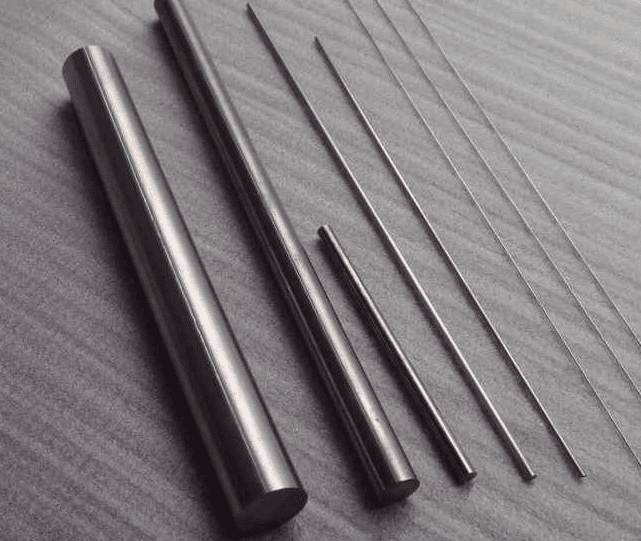
- In the aerospace industry, ring-crystal molybdenum rods are used in high-temperature components such as rocket nozzles and engine parts.
- Their high melting point, thermal stability, and corrosion resistance make them suitable for these demanding applications.
Medical Imaging
- Ring-crystal molybdenum rods are also used in medical imaging equipment, such as X-ray tubes.
- Their ability to withstand high temperatures and maintain stable electrical properties is crucial for the operation of these devices.
Industrial Heating Elements
- Due to their high melting point and excellent thermal conductivity, ring-crystal molybdenum rods are used as heating elements in industrial furnaces and ovens.
- They provide efficient and reliable heating, ensuring consistent temperatures and long service life.
Future Trends and Innovations
Material Science Research
- Continuous research in material science is expected to lead to further improvements in the properties of molybdenum rods.
- This includes the development of new alloys and composite materials that enhance the performance of molybdenum-based products.
Manufacturing Technology
- Advancements in manufacturing technology will enable the production of ring-crystal molybdenum rods with even higher precision and quality.
- Techniques such as additive manufacturing and precision machining will play a crucial role in this development.
Sustainability and Environmental Impact
- As the focus on sustainability increases, manufacturers will strive to minimize the environmental impact of molybdenum production.
- This includes reducing energy consumption, waste generation, and emissions during the manufacturing process.
In summary, advancements in manufacturing ring-crystal molybdenum rods for high-performance uses have led to significant improvements in the material’s properties and applications. These rods are now used in a wide range of industries, including semiconductors, aerospace, medical imaging, and industrial heating. With continued research and technological advancements, the future of molybdenum rods in high-performance applications looks promising.