
In the realm of materials science, the quest for materials that exhibit exceptional wear resistance, high thermal conductivity, and excellent electrical conductivity has led researchers to explore various compositions and structures. Among these, copper-tungsten (W-Cu) composites have emerged as a shining star, offering a unique combination of properties that make them indispensable in a wide range of applications. This article delves into the fascinating world of wear-resistant tungsten-copper, highlighting its properties, applications, and the latest advancements in this field.
Properties of Wear-Resistant copper-tungsten
1. High Wear Resistance
Tungsten, known for its hardness and density, combines with copper, a soft but highly conductive metal, to form a composite that exhibits remarkable wear resistance. The hard tungsten particles embedded within the softer copper matrix create a structure that resists abrasive wear, erosion, and galling, making W-Cu composites ideal for high-stress and high-friction environments.
2. Excellent Thermal Conductivity
Copper, being an excellent thermal conductor, ensures that W-Cu composites can efficiently dissipate heat. This property is crucial in applications where high temperatures are generated, such as in electrical contacts and thermal management systems. The combination of tungsten’s high melting point and copper’s thermal conductivity makes W-Cu composites resistant to thermal fatigue and degradation.
3. Good Electrical Conductivity
Despite tungsten’s poor electrical conductivity, the copper matrix in W-Cu composites maintains good overall electrical conductivity. This makes W-Cu suitable for applications requiring both electrical and thermal conductivity, such as arc contacts in electrical switches and high-power electronics.
Applications of Wear-Resistant copper-tungsten
1. Electrical Contacts
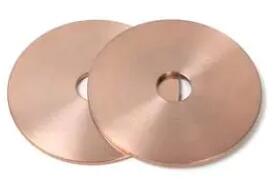
Due to their combination of wear resistance, high thermal conductivity, and good electrical conductivity, W-Cu composites are widely used in electrical contacts. They can withstand the arc erosion and wear associated with repeated electrical switching, ensuring reliable performance and longevity.
2. Aerospace and Defense
In the aerospace and defense industries, W-Cu composites are used in components such as missile nose cones, thermal protection systems, and armor piercing projectiles. Their high density, hardness, and ability to withstand extreme temperatures make them ideal for these high-performance applications.
3. Thermal Management
W-Cu composites are also used in thermal management systems, such as heat sinks and heat spreaders, due to their excellent thermal conductivity and resistance to thermal shock. They effectively dissipate heat, preventing overheating and ensuring the reliability of electronic devices.
Latest Advancements in Wear-Resistant copper-tungsten
1. Nanostructured Composites
Recent research has focused on developing nanostructured W-Cu composites, which offer enhanced mechanical properties and wear resistance compared to traditional microstructured composites. Nanoscale tungsten particles dispersed within a copper matrix can significantly improve the hardness and ductility of the composite.
2. Additive Manufacturing
Additive manufacturing techniques, such as selective laser melting (SLM) and powder bed fusion, have enabled the fabrication of complex W-Cu components with precise control over the microstructure and composition. These techniques offer new possibilities for designing and manufacturing W-Cu composites with tailored properties for specific applications.
3. Surface Engineering
Surface engineering techniques, such as plasma spray coating and laser cladding, are being used to enhance the wear resistance of W-Cu composites. These techniques involve depositing a wear-resistant layer on the surface of the composite, further improving its durability and performance in harsh environments.
Conclusion
Wear-resistant tungsten-copper composites stand out as a versatile and high-performance material in the field of materials science. Their unique combination of properties makes them ideal for a wide range of applications, from electrical contacts to aerospace components. With ongoing research and advancements in nanostructuring, additive manufacturing, and surface engineering, the potential applications of W-Cu composites continue to expand. As we explore new frontiers in technology and engineering, wear-resistant tungsten-copper will undoubtedly remain a shining star in the materials science landscape.