
Stepping into a tungsten rod factory, one is immediately greeted by the sight of precision machinery, the hum of machinery, and the distinct metallic aroma that permeates the air. This factory, dedicated to producing high-quality tungsten rods, is a testament to human ingenuity and the relentless pursuit of excellence in materials science. Let’s take a closer look at the intricate process that transforms raw tungsten into high-performance rods, crucial for a wide array of industrial and scientific applications.
Raw Material Preparation
The journey begins with the sourcing of high-purity tungsten ore. This ore, rich in tungsten trioxide (WO₃), undergoes rigorous purification processes to eliminate impurities. The ore is then reduced to tungsten metal powder through a series of chemical reactions, typically involving hydrogen reduction. This powder forms the foundation for creating tungsten rods.
Powder Consolidation
Once the tungsten powder is obtained, it must be consolidated into a solid form. This is achieved through sintering, a process where the powder particles are heated to just below their melting point, causing them to fuse together into a porous, yet solid, mass. The sintering parameters, such as temperature, time, and atmosphere, are meticulously controlled to ensure optimal consolidation without introducing defects.
Swaging and Drawing
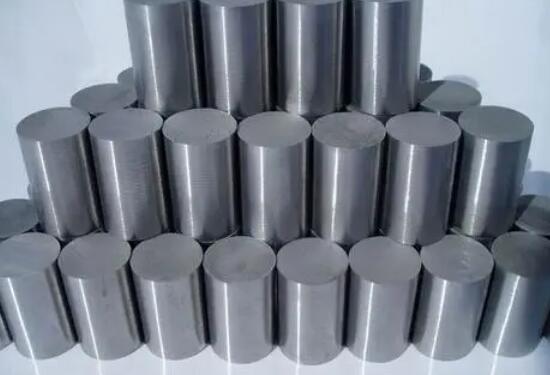
Post-sintering, the tungsten billet is subjected to swaging and drawing operations. Swaging involves pressing the billet through a series of progressively smaller dies, reducing its diameter and increasing its density. Drawing, on the other hand, is a process where the tungsten rod is pulled through a die, further refining its shape and size. These operations are repeated multiple times, each time reducing the rod’s diameter and improving its uniformity and mechanical properties.
Heat Treatment
Heat treatment is a crucial step in the production of high-quality tungsten rods. It involves heating the rods to specific temperatures and holding them there for a controlled duration, followed by cooling. This process relieves internal stresses, enhances grain growth, and improves the rod’s hardness, ductility, and machinability.
Quality Control and Testing
Throughout the production process, rigorous quality control measures are implemented. Each stage is carefully monitored, and samples are regularly tested for purity, dimensions, mechanical properties, and microstructural characteristics. Advanced analytical techniques, such as X-ray diffraction (XRD) and scanning electron microscopy (SEM), are employed to ensure that the rods meet the highest standards of quality.
Final Machining and Packaging
Once the rods have undergone all necessary processing and testing, they are ready for final machining. This may involve cutting to precise lengths, threading, or applying protective coatings. The rods are then meticulously inspected once again before being packaged for shipment. Special care is taken to ensure that the rods are protected from environmental factors that could degrade their performance.
Applications and Market Outlook
High-quality tungsten rods find applications in a myriad of fields, including aerospace, medical technology, electronics, and nuclear industries. Their high density, excellent electrical conductivity, and resistance to high temperatures and corrosion make them indispensable components in everything from X-ray tubes and mass spectroscopy to high-speed machining tools and radiation shielding.
As technology continues to advance, the demand for tungsten rods is expected to grow. Innovations in production techniques and materials science will likely lead to even higher performance standards and broader application possibilities.
In conclusion, the production of high-quality tungsten rods is a highly sophisticated and meticulously controlled process. From raw material preparation to final packaging, each step is designed to ensure that the rods meet the stringent requirements of their intended applications. The dedication and expertise of the workers in a tungsten rod factory are the driving forces behind the creation of these vital materials, contributing to the progress and development of countless industries.