
Molybdenum plates are widely used in various industries due to their excellent properties such as high melting point, good thermal conductivity, and low thermal expansion. However, welding deformation is a common issue during the fabrication process of molybdenum plates, which can affect the quality and performance of the final products. This article reviews the causes of welding deformation in molybdenum plates and explores effective control technologies.
Molybdenum, a refractory metal with a high melting point of 2620°C, is widely used in aerospace, electronics, energy, and chemical industries. Molybdenum plates, in particular, are favored for their excellent mechanical properties and corrosion resistance. However, welding deformation remains a significant challenge in the fabrication of molybdenum plates, as it can lead to dimensional inaccuracies, residual stresses, and reduced structural integrity. Therefore, it is crucial to develop effective control technologies to minimize welding deformation and ensure the quality of the final products.
Causes of Welding Deformation in Molybdenum Plates
Welding deformation in molybdenum plates can be attributed to several factors:
Local and Uneven Heating: During the welding process, the weld zone and adjacent areas are subjected to localized and uneven heating. This results in thermal expansion of the heated metal, which is constrained by the surrounding cooler metal, leading to compressive stresses and plastic deformation.
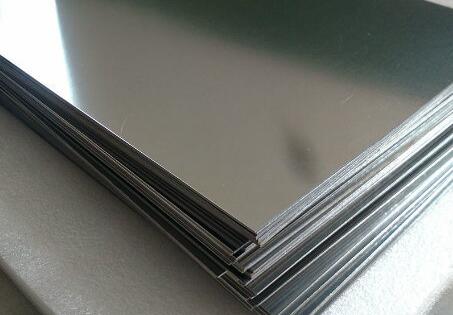
Material Properties: The thermal expansion coefficient, yield strength, and elastic modulus of molybdenum play a significant role in welding deformation. Materials with higher thermal expansion coefficients are more prone to deformation during welding.
Welding Parameters: Welding parameters such as weld cross-sectional area, heat input, preheat temperature, and interpass temperature can all affect welding deformation. Larger weld cross-sectional areas and higher heat inputs generally result in greater deformation.
Weld Position and Structural Design: The position of the weld in the structure and the overall structural design can also influence welding deformation. Asymmetric weld placement or designs that do not account for thermal expansion can lead to bending or angular deformation.
Control Technologies for Welding Deformation in Molybdenum Plates
To minimize welding deformation in molybdenum plates, several control technologies can be employed:
Selection of Appropriate Welding Methods: Different welding methods have varying heat inputs and energy distributions, which can affect welding deformation. Tungsten Inert Gas (TIG) welding and electron beam welding are commonly used for molybdenum plates due to their low heat input and high weld quality.
Optimization of Welding Parameters: By optimizing welding parameters such as welding current, arc voltage, and welding speed, the heat input can be controlled to minimize welding deformation. Generally, smaller welding currents, lower arc voltages, and faster welding speeds are preferred.
Pre-deformation and Pre-stressing Methods: Pre-deformation involves applying a reverse deformation to the workpiece before welding to counteract the expected welding deformation. Pre-stressing involves applying external forces to the workpiece during welding to reduce residual stresses and deformation.
Post-weld Correction Methods: If welding deformation still occurs, post-weld correction methods such as mechanical correction or thermal correction can be used to restore the workpiece to its original shape and dimensions.
Design of Welding Structures: Proper design of welding structures, such as symmetric weld placement and the use of stiffeners, can help to reduce welding deformation by providing better support and constraint to the workpiece.
Latest Research and Technological Developments
Recent research has focused on improving the weldability and reducing the welding deformation of molybdenum and its alloys. Some of the latest developments include:
High-speed Welding Techniques: Studies have shown that increasing the welding speed and reducing the heat input can significantly improve the toughness of molybdenum welds and reduce welding deformation.
Vacuum Electron Beam Welding: Vacuum electron beam welding is a high-energy-density welding method that is well-suited for molybdenum and its alloys. It offers advantages such as narrow heat-affected zones, high weld quality, and minimal distortion.
Post-weld Heat Treatment: Post-weld heat treatment, such as annealing or stress relieving, can be used to reduce residual stresses and improve the mechanical properties of the weldment.
Advanced Welding Materials: The development of advanced welding materials, such as molybdenum-based alloys with improved weldability and mechanical properties, can also help to reduce welding deformation and improve the overall quality of the weldment.
Welding deformation is a common issue in the fabrication of molybdenum thin plates, but it can be effectively controlled through the use of appropriate welding methods, optimization of welding parameters, pre-deformation and pre-stressing methods, post-weld correction methods, and proper design of welding structures. Furthermore, ongoing research and technological developments are expected to improve the weldability and reduce the welding deformation of molybdenum and its alloys, paving the way for their wider application in various industries. By adopting these control technologies and staying updated on the latest research and developments, manufacturers can ensure the quality and performance of their molybdenum thin plate products.