
In the ever-evolving landscape of manufacturing, materials play a crucial role in determining the efficiency, durability, and performance of products. One such innovative material that has gained significant attention is the sintered molybdenum plate. With its exceptional properties and versatile applications, sintered molybdenum plate is revolutionizing various industries. This article delves into the properties, manufacturing process, innovative applications, and future development trends of sintered molybdenum plate.
Properties of Sintered Molybdenum Plates
Sintered molybdenum plate is renowned for its outstanding properties, which make it a preferred choice in numerous manufacturing applications. Some of its key properties include:
High-Temperature Resistance: Sintered molybdenum plate exhibits excellent resistance to high temperatures, with a working temperature range of 1100-1800°C. This makes it ideal for applications where extreme heat is a concern.
Corrosion Resistance: It demonstrates good corrosion resistance to various media, ensuring longevity and reliability in harsh environments.
High Density: With a density of up to 9.6g/cm³, sintered molybdenum plate is a dense material that can withstand significant mechanical stress.
High Purity: The material can achieve a purity of 99.5% or higher, making it suitable for applications where material purity is critical.
Manufacturing Process of Sintered Molybdenum Plates
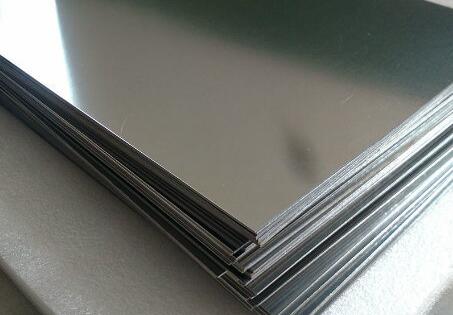
The manufacturing process of sintered molybdenum plate involves several key steps:
Raw Material Mixing: High-quality molybdenum powder is mixed with other metal powders in specific proportions to ensure material uniformity.
Pressing: The mixed powder is pressed into a plate blank using a cold isostatic pressing method. This technique helps in achieving a uniform density and microstructure.
Sintering: The plate blank is then sintered in a hydrogen atmosphere. The sintering process involves heating the blank in multiple temperature stages to achieve a dense and well-bonded molybdenum plate. The sintering temperatures typically range from 900°C to 1780°C, with varying holding times at each temperature to ensure optimal densification.
Innovative Applications in Manufacturing
Sintered molybdenum plate finds applications in various industries due to its unique properties. Some of its innovative applications include:
Electronics and Semiconductors: It is used in the manufacturing of sputtering targets for the production of electronic components such as LCD screens, solar cells, and semiconductor devices. The high purity and dense microstructure of sintered molybdenum plate make it ideal for these applications.
High-Temperature Furnaces: Sintered molybdenum plate serves as a crucial component in high-temperature furnaces, where it is used as insulation and heating elements. Its ability to withstand extreme temperatures and resist thermal shock makes it a valuable material in this industry.
Wear-Resistant Materials: By adding other alloy elements, the wear resistance of sintered molybdenum plate can be enhanced. This makes it suitable for manufacturing wear-resistant plates used in mining, construction, and other industries where abrasion is a concern.
Metallized Ceramic Substrates: Sintered molybdenum plate is used in the production of metallized ceramic substrates for wide-bandgap devices and high-temperature applications. When combined with materials like aluminum nitride, it forms a substrate with a well-matched coefficient of thermal expansion (CTE), ensuring good reliability and performance.
Future Development Trends
The future of sintered molybdenum plate looks promising, with several development trends on the horizon:
Increasing Market Demand: As the electronics, semiconductor, and high-temperature furnace industries continue to grow, the demand for sintered molybdenum plate is expected to rise. This will drive further innovation and investment in the material’s production and applications.
Technological Advancements: Ongoing research and development efforts are focused on optimizing the powder characteristics and processing parameters to enhance the properties of sintered molybdenum plate. This includes improving its density, microstructure, and overall performance.
Expanding Applications: The versatility of sintered molybdenum plate opens up new opportunities for its use in emerging industries such as aerospace and nuclear power. Its ability to withstand extreme conditions and maintain performance makes it a valuable material in these sectors.
Sintered molybdenum plate is an innovative material that is transforming various industries with its exceptional properties and versatile applications. From electronics and semiconductors to high-temperature furnaces and wear-resistant materials, its impact is far-reaching. As technology continues to advance, the demand for sintered molybdenum plate is expected to grow, further solidifying its position as a crucial material in the manufacturing sector. With ongoing research and development, the future of sintered molybdenum plate holds even more promise, paving the way for new and exciting applications in the years to come.