
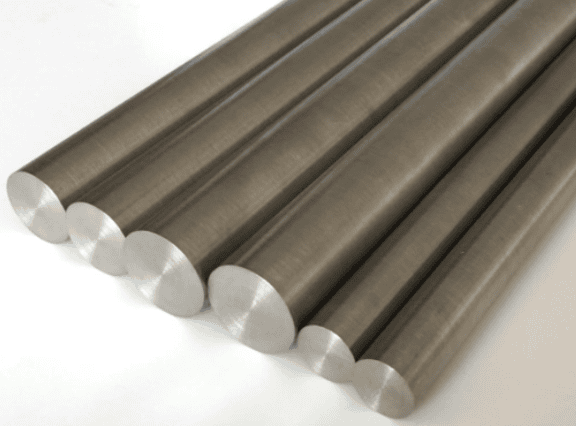
Molybdenum (Mo), a transition metal known for its high melting point, excellent corrosion resistance, and remarkable mechanical properties, is widely used in various industries such as aerospace, electronics, and medical technology. In particular, molybdenum rods are essential components in applications requiring high temperature stability, corrosion resistance, and strength. Ensuring the purity of molybdenum rods is crucial to their performance and reliability. This article delves into the professional methods and standards used to test the purity of molybdenum rods.
Importance of Purity Testing
The purity of molybdenum rods directly impacts their physical and chemical properties, thereby influencing their performance in specific applications. Impurities, even in small amounts, can alter the material’s mechanical strength, corrosion resistance, and thermal conductivity. Therefore, purity testing is essential to verify the quality and compliance of molybdenum rods with industry standards and specifications.
Professional Methods for Purity Testing
Several professional methods are employed to test the purity of molybdenum rods, each with its own set of advantages and applications:
- Spectroscopic Analysis:
Optical Emission Spectrometry (OES): This method involves exciting the atoms in the molybdenum rod sample with an electrical discharge or laser, causing them to emit light at specific wavelengths. The intensities of these emitted lines are proportional to the concentrations of the elements present. OES is rapid and provides qualitative and quantitative analysis of multiple elements simultaneously.
X-ray Fluorescence Spectrometry (XRF): In this technique, X-rays are directed at the sample, causing the inner-shell electrons to be ejected. The resulting vacancies are filled by outer-shell electrons, releasing characteristic X-rays that can be analyzed to determine the elemental composition. XRF is non-destructive and suitable for analyzing both bulk and surface compositions.
- Mass Spectrometry (MS):
- Inductively Coupled Plasma-Mass Spectrometry (ICP-MS): ICP-MS combines inductively coupled plasma (ICP) ionization with mass spectrometry for the detection and quantification of trace elements. Sample digestion followed by ICP-MS analysis allows for highly sensitive and selective determination of impurities at parts-per-billion (ppb) levels.
- Chemical Analysis:
Wet Chemical Methods: These involve dissolving the molybdenum rod sample in an appropriate solvent and then using various chemical reactions and precipitations to separate and quantify the impurities. Wet chemical methods are traditional but reliable, offering precise measurements for specific impurities.
Titrimetric Methods: Involves using a standardized solution (titrant) to react with the impurities in the dissolved sample until a stoichiometric endpoint is reached. Indicators or potentiometric titration can be used to detect the endpoint, providing quantitative information on the impurity content.
Standards and Regulations
The purity testing of molybdenum rods is governed by various international and national standards that ensure consistency and comparability of results. Key standards include:
- ASTM B386-17: Standard Specification for Molybdenum and Molybdenum-Alloy Rod, Bar, and Wire.
- DIN 17743: Molybdenum and molybdenum alloys; wrought products; chemical composition and mechanical properties.
- EN 10273: Molybdenum and molybdenum alloys; rod, bar and wire for general purposes.
These standards specify the requirements for chemical composition, mechanical properties, testing methods, and inspection rules for molybdenum rods. Compliance with these standards ensures that the molybdenum rods meet the specified purity levels and quality characteristics required for their intended applications.
Testing the purity of molybdenum rods is a critical aspect of ensuring their performance and reliability in various industries. Professional methods such as spectroscopic analysis, mass spectrometry, and chemical analysis provide accurate and sensitive means of detecting and quantifying impurities. Adherence to international and national standards ensures consistency and comparability of results, allowing manufacturers and users to confidently assess the quality of molybdenum rods. As technology advances, continuous improvements in purity testing methods will further enhance the reliability and performance of molybdenum rods in diverse applications.