
Abstract: This paper investigates the impact of deformation on the microstructure and mechanical properties of molybdenum plates. Through a combination of experimental research and theoretical analysis, the effects of deformation temperature, deformation amount, and rolling direction on the properties of molybdenum plates are systematically explored. The results indicate that deformation significantly alters the microstructure of molybdenum plates, thereby affecting their mechanical properties such as strength, hardness, ductility, and anisotropy. This research provides valuable insights for optimizing the processing technology of molybdenum plates and improving their performance in various applications.
1. Introduction
Molybdenum, with its high melting point, high strength, and high elastic modulus, is widely used in fields such as molybdenum electrodes, nuclear energy components, missile and aircraft military parts, as well as emerging applications like LCD displays, sensors, semiconductors, and microelectronics . Molybdenum plates, as an important form of molybdenum materials, often undergo various deformation processes during processing and manufacturing, which have a profound impact on their properties. Understanding the influence of deformation on the properties of molybdenum plates is of great significance for optimizing their processing technology and expanding their application range.
2. Influence of Deformation Temperature on Molybdenum Plate Properties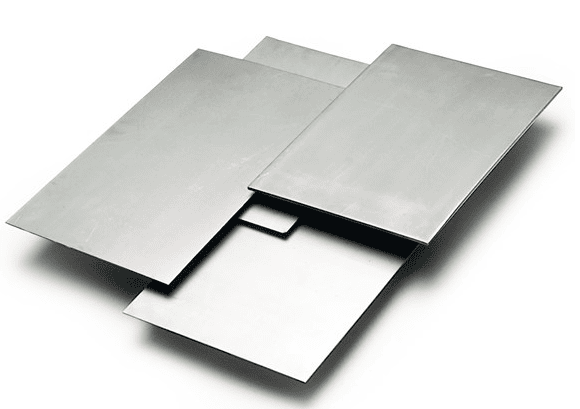
2.1 Effect on Microstructure
The deformation temperature has a significant impact on the microstructure of molybdenum plates. Studies have shown that low-temperature breakdown rolling can produce slimmer grains in molybdenum plate billets compared to high-temperature rolling. The grain boundaries obtained through low-temperature breakdown rolling have a higher degree of chain overlapping, which contributes to the improvement of the overall properties of the final product . This is because at low temperatures, the dynamic recovery and recrystallization processes are inhibited, and the deformation energy is stored in the material in the form of dislocations and substructures, leading to the refinement of grains.
2.2 Effect on Mechanical Properties
Deformation temperature also affects the mechanical properties of molybdenum plates. The combination of slimmer grains and higher-degree chain overlapping of grain boundaries obtained through low-temperature breakdown rolling provides the final product with higher strength and elongation. For example, in some studies, molybdenum plates processed by low-temperature breakdown rolling exhibited better comprehensive properties compared to those processed by high-temperature rolling . This is due to the fact that fine grains can effectively hinder the movement of dislocations, thereby increasing the strength of the material. At the same time, the higher-degree chain overlapping of grain boundaries can improve the plasticity of the material to some extent.
3. Influence of Deformation Amount on Molybdenum Plate Properties
3.1 Effect on Microstructure
As the deformation amount increases, the microstructure of cold-rolled molybdenum plates undergoes significant changes. With the increase in rolling deformation from 70% to 95%, the porosity of the cold-rolled plates decreases significantly, the crystal grains are severely distorted, and the fibrous structure becomes more uniform and finer. The dislocation density increases, and substructures such as sub-grains are formed within the grains. These substructures hinder further slip within the grains, thereby increasing the strength of the material .
3.2 Effect on Mechanical Properties
The increase in deformation amount has a pronounced effect on the mechanical properties of molybdenum plates. The hardness of cold-rolled plates increases with the increase in deformation amount. For instance, the Vickers hardness of the plates increases from 238.78 HV to 326.35 HV as the rolling deformation increases from 70% to 95%, representing an increase of 36.7% . The room-temperature tensile strength also increases from 816.528 MPa to 1028.095 MPa, an increase of 25.9%. However, the elongation decreases from 18.33% to 2.5%, indicating a reduction in ductility.
The fracture morphology of molybdenum plates also changes with the deformation amount. Cold-rolled molybdenum plates with 70% and 80% deformation exhibit tear ridges and dimple features on the fracture surface, indicating a ductile-brittle mixed fracture. In contrast, cold-rolled molybdenum plates with 90% and 95% deformation have flat fracture surfaces, showing brittle fracture characteristics .
3.3 Effect on Texture
The deformation amount also affects the texture of molybdenum plates. As the deformation amount increases from 70% to 80%, the rolling direction rotates from the direction to the direction. Cold-rolled molybdenum plates with 80%, 90%, and 95% deformation form textures with rolling directions biased towards the and directions, the and directions, and the and directions, respectively .
4. Influence of Rolling Direction on Molybdenum Plate Properties
4.1 Effect on Bending Performance
The rolling direction of molybdenum plates has a significant impact on their bending performance. Unidirectional rolling may result in higher strength and hardness in the rolling direction and relatively poorer performance in the direction perpendicular to the rolling direction, leading to anisotropy. This anisotropy can be exacerbated during the bending process, making the bending parts more prone to fracture in specific directions .
In contrast, bidirectional rolling, where the rolling direction is continuously changed during the rolling process (e.g., rotating the plate by 90° after rolling each surface), can eliminate the anisotropy of the rolled plate. This means that the plate will exhibit more consistent performance when bent in different directions, reducing the risk of bending fracture or cracks caused by anisotropy .
4.2 Effect on Deformation Uniformity
Bidirectional rolling helps to achieve more uniform deformation of the plate in all directions, which is crucial during the bending process. Since the plate is subjected to forces and deformations from different directions during bending, if the plate itself has anisotropy, these forces and deformations may cause uneven stress distribution inside the plate, leading to bending fracture. By eliminating anisotropy through bidirectional rolling, the actual bending angle of the bending parts can be closer to the expected value, and the rebound angle can be relatively small. In contrast, the actual bending angle of bending parts made from unidirectionally rolled plates may deviate significantly from the expected value, and the rebound angle may be larger .
5. Conclusion
Deformation has a profound impact on the microstructure and mechanical properties of molybdenum plates. Deformation temperature, deformation amount, and rolling direction all play important roles in determining the properties of molybdenum plates. Low-temperature breakdown rolling can produce finer grains and higher-degree chain overlapping of grain boundaries, improving the strength and elongation of the plates. Increasing the deformation amount can refine the grains, increase the dislocation density, and form substructures, thereby increasing the strength and hardness of the plates but reducing their ductility. Rolling direction affects the anisotropy of the plates, with bidirectional rolling being able to eliminate anisotropy and improve the bending performance of the plates.
In practical applications, it is necessary to comprehensively consider the effects of various deformation factors on the properties of molybdenum plates and optimize the processing technology accordingly to obtain molybdenum plates with desired properties for different applications. Further research is needed to explore the underlying mechanisms of the influence of deformation on the properties of molybdenum plates and to develop more effective processing methods to improve their performance.