
Molybdenum-copper alloy, a pseudo-alloy composed of two metals that are not mutually soluble, has emerged as a remarkable material in the industrial world. This unique combination of molybdenum (Mo) and copper (Cu) not only retains the characteristics of both metals but also exhibits exceptional properties that make it indispensable in various high-tech applications.
The molybdenum-copper alloy boasts a range of superior attributes. Firstly, it possesses high electrical and thermal conductivity. Molybdenum, apart from gold, silver, and copper, is one of the metals with good electrical and thermal conductivity. Therefore, the alloy formed with copper exhibits exceptional electrical and thermal conductivity. This property is crucial in applications where high power and heat dissipation are required, such as in microelectronics and high-power integrated circuits.
Secondly, the alloy offers a low and adjustable coefficient of thermal expansion. Copper has a relatively high coefficient of thermal expansion, while molybdenum has a low one. This allows for the production of materials with tailored thermal expansion coefficients, matching those of other materials and preventing thermal stress-related failures.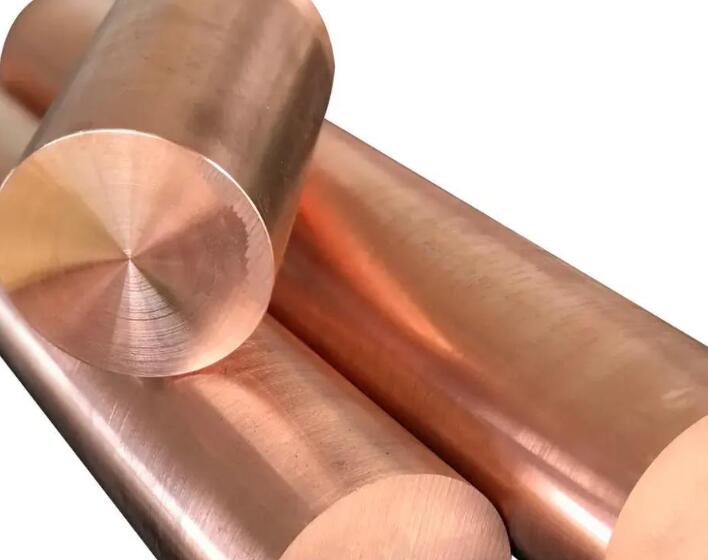
Moreover, molybdenum-copper alloy exhibits special high-temperature performance. With a melting point of 2610°C for molybdenum and 1083°C for copper, the alloy maintains good strength and plasticity at ambient and moderate temperatures. When temperatures exceed copper’s melting point, the copper in the material can liquefy and evaporate, absorbing heat and providing a cooling effect (sweating cooling). This unique property makes it suitable for high-temperature applications like nozzle throat linings resistant to rocket propellant combustion temperatures and electrical contacts under high-temperature arcs.
The alloy is also non-magnetic, as both molybdenum and copper are non-ferromagnetic metals. This characteristic makes it an excellent choice for applications where magnetic interference must be minimized, such as in precision instrumentation and electronic devices.
Additionally, molybdenum-copper alloy has low gas content and excellent vacuum performance. The oxides of both molybdenum and copper are easily reduced, and impurities such as nitrogen, hydrogen, and carbon can be readily removed, ensuring excellent vacuum performance.
From a machinability standpoint, the introduction of copper reduces the hardness and increases the plasticity of molybdenum, making the alloy easier to machine into complex shapes.
Due to these exceptional properties, molybdenum-copper alloy finds diverse applications. It is widely used in vacuum contacts, which are increasingly being adopted in China. It also serves as a conductive and heat-dissipating component in high-power integrated circuits and microwave devices, satisfying requirements for high electrical and thermal conductivity, heat resistance, vacuum performance, and controlled thermal expansion.
Furthermore, the alloy is employed in special instrumentation components that demand non-magnetic properties, controlled thermal expansion coefficients, high elastic moduli, and high electrical and thermal conductivity. It is also used in high-temperature components of rockets and missiles that operate at slightly lower temperatures and can replace molybdenum in other weapon systems, such as extended-range artillery.
In the chemical industry, its excellent corrosion resistance makes it suitable for chemical equipment and reactors, ensuring stable operation in harsh environments. The aerospace industry benefits from its high temperature and oxidation resistance, using it in aircraft engine combustion chamber walls and turbine blades.
The production of molybdenum-copper alloy primarily involves high-temperature melting of molybdenum and copper, followed by processes like isostatic pressing, sintering, and copper infiltration to achieve a dense and finely structured material with excellent arc-interrupting and electrical conductivity properties.
China, with abundant molybdenum resources, is well-positioned to capitalize on the growing demand for molybdenum-copper alloy. Key producers such as Jinmo Stock, Zhongwu High-Tech, Luoyang Molybdenum, and Jixiang Stock are driving the domestic and international markets with their high-quality products.
In conclusion, molybdenum-copper alloy, with its unique blend of properties, is steering the trend in industrial applications. From electronics to aerospace, from chemicals to machinery, this alloy is poised to play an increasingly critical role in the advancement of technology and industrial progress. As technological needs evolve, the application horizons of molybdenum-copper alloy will continue to expand, marking it as a cornerstone material in the modern technological landscape.