
The density characteristics of copper-tungsten alloy can be summarized as: its density is generally between that of pure tungsten and pure copper, which means it is lower than pure tungsten but higher than pure copper. Specifically, the density of tungsten-copper alloy is approximately 17.0-18.5 g/cm³, while the density of pure tungsten is 19.34g/cm³, and the density of pure copper ranges from 8.89 to 8.92g/cm³ (the specific value may vary slightly depending on the type and purity of copper).
The factors influencing the density of copper-tungsten alloy include:
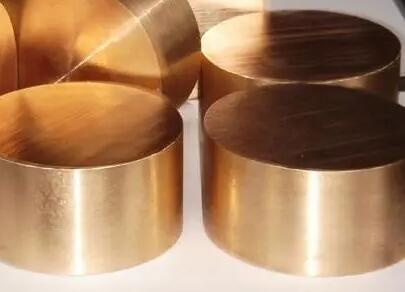
- Composition ratio: The composition ratio of tungsten-copper alloy directly affects its density. Generally speaking, the higher the tungsten content, the greater the density of the alloy. Since the density of tungsten is much greater than that of copper, increasing the proportion of tungsten will correspondingly increase the density of the alloy.
- Preparation process: Different preparation processes significantly affect the density of copper-tungsten alloy. For example, the pressure during pressing, sintering temperature, and time all influence the compactness of the alloy, thereby affecting its density. Adopting finer processing techniques and stricter heat treatment processes can help improve the density and performance of the alloy.
- Raw material composition: Impurities and oxygen content in the raw materials are also critical factors affecting alloy density. High-purity, low-oxygen raw materials provide better wettability and bonding properties, contributing to the production of alloys with higher density.
- Particle size: The particle size of tungsten powder also influences alloy density. Generally, coarser tungsten powder particles are easier to achieve the desired density during pressing due to their stronger bridging effect, which better transmits pressing pressure. However, finer powders have greater free energy during sintering, facilitating the sintering process and densification of the alloy.
In summary, the density of copper-tungsten alloy is a complex and variable parameter, influenced and constrained by various factors. In practical applications, it is necessary to select appropriate composition ratios and preparation processes based on specific requirements and conditions to obtain copper-tungsten alloy materials with ideal density and performance.