
copper-tungsten materials, a remarkable combination of tungsten’s hardness and heat resistance with copper’s electrical and thermal conductivity, have emerged as pivotal composites in various industries. Their evolution and development from traditional processes to modern advancements showcase a journey marked by innovation and expanding applications.
The history of copper-tungsten composites dates back to the 1930s, where they were initially utilized in high-voltage electrical switches due to their excellent pressure and electrical erosion resistance. As technology progressed, the 1960s saw their application expand into resistance welding electrodes and aerospace components requiring high temperature resistance. By the 1990s, tungsten-copper composites gained widespread attention as electronic packaging and heat sink materials in large-scale integrated circuits and high-power electronic devices. The 21st century further widened their scope, incorporating them into military applications such as armor-piercing projectile casings, missile nozzles, and targets.
Traditional Processing Techniques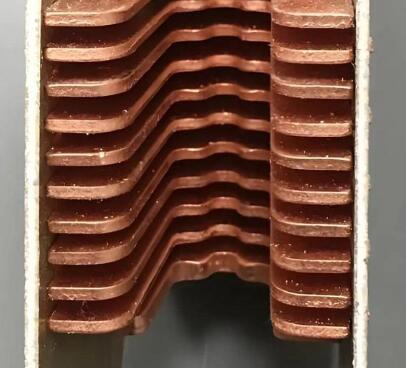
Traditionally, copper-tungsten composites were prepared using methods like infiltration and liquid-phase sintering. Infiltration involves pressing tungsten powder or a mixture of tungsten and copper powder into a preform, creating a porous tungsten skeleton, and then infiltrating molten copper into the pores. Although this method produces materials with high density and good electrical and thermal conductivity, it can be challenging to control the porosity and uniformity of the copper distribution.
Liquid-phase sintering, another traditional method, mixes tungsten and copper powders, shapes them, and sinters them above the copper melting point. While this process is relatively simple and controllable, the poor wettability between liquid copper and tungsten surfaces can affect the final sintered density.
Modern Advancements and Techniques
Recent years have witnessed significant advancements in the preparation of copper-tungsten composites. New methods such as activated liquid-phase sintering and functional gradient materials have emerged. Activated liquid-phase sintering enhances sintering density and mechanical properties by adding activating elements, although this can somewhat compromise electrical and thermal conductivity. Functional gradient materials, on the other hand, offer a gradient in composition and properties, resulting in improved mechanical performance, ablation resistance, and thermal shock resistance.
Powder preparation techniques like thermal spray atomization and thermochemical methods, as well as forming techniques such as injection molding and warm compaction, have also seen rapid development. techniques like microwave sintering, laser sintering, and spark plasma sintering further expand the possibilities for preparing tungsten-copper composites with enhanced properties.
Applications and Market Trends
copper-tungsten materials are now extensively used in electrical engineering, machining, and electronic information fields, particularly in high-power semiconductor devices, electronic packaging, aerospace, and military applications. Their high thermal conductivity, low thermal expansion coefficient, high strength, high hardness, and wear resistance make them ideal for demanding environments.
The market for tungsten-copper heat sink materials is growing steadily. Global sales of tungsten-copper alloy materials are projected to increase from approximately 1.5 billion in 2026. Asia, particularly China, Japan, and South Korea, is the primary consumer region, followed by Europe and North America. With ongoing technological innovation and environmental concerns, the market is trending towards higher performance, diversity, and eco-friendliness.
Future Outlook
The future of copper-tungsten materials looks promising, with continuous advancements in preparation techniques and expanding applications. As modern science and technology demand materials with superior performance and complex shapes, tungsten-copper composites are poised to play a crucial role. Their unique properties make them indispensable in industries ranging from aerospace to electronics, power generation to metallurgical machinery.
In conclusion, copper-tungsten materials have evolved significantly from traditional processing techniques to modern innovations, becoming pivotal composites in various technological advancements. With ongoing research and development, their applications will continue to expand, driving progress in numerous fields. The journey of tungsten-copper materials from tradition to modernity exemplifies the power of innovation and adaptability in material science.