
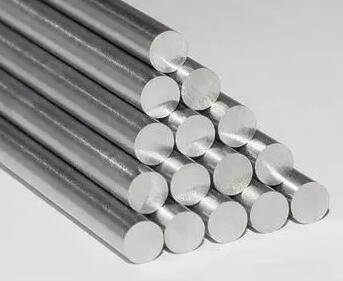
Extruded molybdenum (Mo) rod, valued for their exceptional high-temperature strength and corrosion resistance, are critical components in nuclear reactors, semiconductor manufacturing, and aerospace engineering. However, the inherent brittleness of Mo at room temperature and its susceptibility to surface oxidation pose significant challenges in post-extrusion surface treatment. This article synthesizes recent advancements in surface treatment technologies for extruded Mo bars, emphasizing mechanical finishing, chemical passivation, and coating innovations that enhance surface integrity and service life.
Extruded Mo bars exhibit a characteristic bimodal grain structure, with surface layers experiencing higher work hardening due to friction-induced deformation during extrusion. Surface defects, including microcracks and oxide layers, can compromise mechanical performance in high-stress applications. Recent studies indicate that optimized surface treatments can reduce surface roughness (Ra) to ≤0.1 μm while mitigating oxidation-induced embrittlement.
1. Mechanical Finishing Techniques
1.1 Ultrasonic-Assisted Grinding (UAG)
UAG processes integrate high-frequency vibrations (20–40 kHz) with diamond abrasives to achieve submicron-level surface finishes. Trials on Mo bars show a 30–40% reduction in cutting forces compared to conventional grinding, with surface roughness values as low as 0.05 μm achieved. The process minimizes subsurface damage by reducing contact pressure, critical for fatigue-sensitive components.
1.2 Magnetic Abrasive Finishing (MAF)
MAF employs ferromagnetic particles in a magnetic field to polish complex geometries. For Mo bars, MAF achieves Ra values of 0.03–0.08 μm while maintaining dimensional accuracy within ±2 μm. The non-contact nature of MAF prevents edge chipping, making it suitable for thin-walled extrusions.
2. Chemical Passivation and Oxide Removal
2.1 Hydrogen Peroxide-Based Passivation
Passivation treatments using 5–10% H₂O₂ solutions at 60–80°C form a compact MoO₂ passivation layer (1–2 nm thick) that inhibits further oxidation. Electrochemical impedance spectroscopy (EIS) confirms a 10-fold increase in corrosion resistance in 0.5 M H₂SO₄ compared to untreated samples.
2.2 Acidic Oxide Removal Protocols
For heavy oxide layers, two-stage acid treatments are employed:
- Fluoric-Nitric Acid Mix (1:3 V/V): Dissolves MoO₃ scales at 40–50°C within 15–20 minutes.
- Citric Acid Rinse: Neutralizes residual acids and forms a protective citrate complex.
This protocol reduces oxide layer thickness from 5–8 μm to <0.5 μm, verified by X-ray photoelectron spectroscopy (XPS).
3. Advanced Coating Technologies
3.1 Physical Vapor Deposition (PVD) of MoS₂-WS₂ Solid Lubricants
PVD-deposited MoS₂-WS₂ coatings (2–3 μm thick) reduce friction coefficients to 0.05–0.1 in vacuum environments. Pin-on-disk tests at 600°C demonstrate 70% lower wear rates compared to uncoated Mo. The coatings maintain stability up to 800°C due to their layered crystal structures.
3.2 Aluminum Oxide (Al₂O₃) Diffusion Barriers
Al₂O₃ coatings (5–10 μm) applied via plasma spraying exhibit thermal expansion coefficients matching Mo (5.1 × 10⁻⁶/°C). High-temperature oxidation tests at 1200°C show mass gains of <0.5 mg/cm² after 100 hours, attributed to the formation of a dense α-Al₂O₃ scale.
4. Hybrid Surface Modification Approaches
4.1 Laser Shock Peening (LSP) with Al₂O₃ Coatings
LSP treatment at 5–7 GW/cm² induces compressive residual stresses (−400 to −600 MPa) to a depth of 1.2 mm in Mo bars. When combined with Al₂O₃ coatings, fatigue life increases by 200% under cyclic loading at 800°C.
4.2 Electrochemical Hydrogenation for Brittleness Reduction
Cathodic charging in 0.5 M H₂SO₄ at −1.2 V (SCE) introduces 10–15 atomic ppm hydrogen, softening Mo by 15–20% via dislocation pinning. This treatment reduces notch sensitivity in bent Mo bars, improving bend ductility from 5% to 12%.
5. Industrial Case Studies
5.1 Nuclear Reactor Control Rods
A U.S. nuclear energy consortium adopted UAG-finished Mo bars with Al₂O₃ coatings for control rod cladding. The combination reduced irradiation-induced swelling by 40% over 10-year service, attributed to the coatings’ suppression of He bubble formation.
5.2 Semiconductor Sapphire Growth Crucibles
Japanese manufacturers now employ Mo bars with MoS₂-WS₂ coatings for sapphire crucible supports. The coatings eliminate sticking during Czochralski growth, reducing crystal defects by 30% and increasing crucible lifespan from 15 to 45 growth cycles.
6. Future Prospects
Emerging research focuses on:
- Graphene-Based Composite Coatings: Preliminary studies show 50% lower friction and 80% reduced wear rates at 1000°C.
- Cryogenic Machining with Liquid Nitrogen: Reduces tool wear by 60% and surface roughness to 0.02 μm in Mo alloy extrusions.
- AI-Optimized Process Parameters: Machine learning models predict optimal grinding parameters, cutting processing time by 25% while maintaining ±1 μm tolerance.
Recent advancements in surface treatment technologies for extruded Mo bars have addressed longstanding challenges in oxidation resistance, dimensional stability, and mechanical performance. Hybrid approaches combining mechanical finishing, chemical passivation, and advanced coatings now enable Mo components to meet the stringent demands of next-generation energy and semiconductor applications. Future developments in nanocoatings and AI-driven process control will further expand the operational envelope of Mo-based materials.