
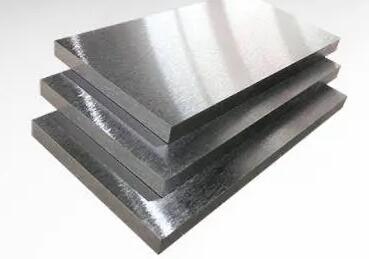
Molybdenum (Mo), renowned for its high melting point, excellent thermal conductivity, and remarkable corrosion resistance, is a strategic metal with diverse applications across various industries. In the form of plates, molybdenum offers unique properties that make it ideal for use in electronics, aerospace, medical equipment, and energy sectors. However, processing molybdenum plates to meet specific dimensional and shape requirements necessitates precise and reliable cutting techniques. Among the various cutting methods, mechanical cutting stands out due to its versatility, efficiency, and cost-effectiveness. This article explores the application of mechanical cutting in molybdenum plate processing, highlighting its advantages, challenges, and best practices.
Types of Mechanical Cutting Techniques
Sawing:
Sawing is a common method for cutting molybdenum plates. Circular saws equipped with carbide-tipped blades are often used due to their ability to withstand the high temperatures generated during the cutting process. Band saws, another variant, offer more flexibility in terms of cutting shapes and sizes, although they may require slower feed rates to prevent blade wear.
Shearing:
Shearing is suitable for cutting molybdenum plates into thinner strips or sheets. Mechanical shears use a pair of blades that move in opposite directions to shear the material cleanly. This method is particularly advantageous for achieving high-precision cuts in thicker plates where sawing might be less efficient.Milling and Drilling:
For more complex shapes and features, milling and drilling machines are employed. Milling involves the use of rotating cutters to remove material, while drilling creates holes of specific diameters. These techniques require precise control over feed rates and spindle speeds to prevent tool wear and maintain surface integrity.Plasma and Laser Cutting:
While traditionally classified as thermal cutting methods, plasma and laser cutting can also be adapted for mechanical processes by integrating them with CNC machinery. These advanced techniques offer high precision and fast cutting speeds, making them suitable for intricate designs and thin plates.
Advantages of Mechanical Cutting
- Precision: Mechanical cutting techniques, particularly when automated, offer high precision and repeatability, ensuring consistent dimensional accuracy.
- Versatility: The range of mechanical cutting methods allows for flexibility in processing molybdenum plates of varying thicknesses and shapes.
- Efficiency: With appropriate tool selection and machine settings, mechanical cutting can achieve high productivity rates, minimizing processing time and costs.
- Material Savings: Precise cutting minimizes waste, optimizing material usage and reducing overall costs.
Challenges and Considerations
- Tool Wear: Molybdenum’s hardness and high melting point can accelerate tool wear, necessitating regular tool changes and potentially increasing operational costs.
- Heat Generation: Cutting molybdenum generates significant heat, which can affect the material’s microstructure and properties if not adequately controlled.
- Surface Finish: Achieving a smooth, burr-free surface finish may require additional post-processing steps, such as grinding or polishing.
Best Practices for Mechanical Cutting of Molybdenum Plates
- Tool Selection: Choose carbide-tipped or other hard metal tools designed specifically for cutting refractory metals. Regularly inspect and replace worn tools to maintain cutting quality.
- Coolant Usage: Employ suitable coolants to manage heat generation and extend tool life. Water-based coolants are commonly used but must be compatible with the cutting process and material properties.
- Machine Calibration: Ensure that the cutting machine is accurately calibrated to achieve the desired precision and repeatability. Regular maintenance and inspection are crucial.
- Process Parameters: Optimize cutting parameters, such as feed rates, spindle speeds, and depth of cut, based on the specific mechanical cutting method and molybdenum plate thickness.
- Post-Processing: Implement post-processing steps, such as grinding or deburring, to achieve the desired surface finish and remove any imperfections.
Mechanical cutting plays a pivotal role in the processing of molybdenum plates, enabling the fabrication of components with precise dimensions and complex geometries. By understanding the unique challenges associated with cutting molybdenum and adopting best practices, manufacturers can optimize their processes, improve productivity, and maintain material integrity. As technology advances, new cutting tools and techniques will continue to emerge, further enhancing the capabilities and efficiency of mechanical cutting in molybdenum plate processing.