
Abstract: This paper delves into the relationship between the temperature of molybdenum plates and their corrosion resistance performance. Through an analysis of relevant literature and research findings, it discusses the effects of temperature on the corrosion resistance of molybdenum plates in different environments and the corresponding mechanisms. The research aims to provide theoretical guidance and practical references for the application and development of molybdenum plates in various fields.
1. Introduction
Molybdenum is a refractory metal with excellent properties such as high melting point, high strength, good electrical and thermal conductivity, and outstanding corrosion resistance in certain environments. Molybdenum plates are widely used in industries such as aerospace, metallurgy, glass, and electronics due to these characteristics. However, in practical applications, molybdenum plates are often exposed to different temperature environments, and temperature can have a significant impact on their corrosion resistance performance. Therefore, studying the influence of temperature on the corrosion resistance of molybdenum plates is of great significance for optimizing their application and improving their service life.
2. Corrosion Behavior of Molybdenum Plates at Different Temperatures
2.1 Corrosion in High-Temperature Environments
Molybdenum has good high-temperature performance, but it is not immune to corrosion at high temperatures. In high-temperature environments, molybdenum can react with oxygen in the air to form molybdenum oxides. When the temperature is above 400°C, molybdenum begins to oxidize, and the degree of oxidation intensifies with the increase in temperature. The surface oxide layer formed is mainly MoO₃, which has a loose structure and can easily lead to embrittlement of molybdenum and its alloys. As the oxidation temperature further increases, the oxide will volatilize, causing structural failure of molybdenum and its alloys during high-temperature use.
In some high-temperature applications, such as in the combustion chambers, nozzles, valves, and protective coatings of aerospace engines, molybdenum plates are often subjected to high-temperature flames and gas erosion. The high-temperature oxidation and erosion can significantly reduce the corrosion resistance and mechanical properties of molybdenum plates, affecting the performance and reliability of the equipment.
2.2 Corrosion in Low-Temperature Environments
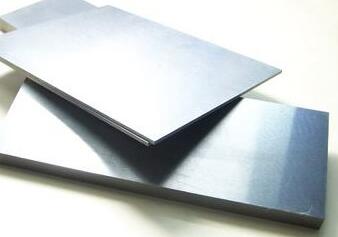
Although molybdenum is generally considered to have good corrosion resistance, its corrosion behavior in low-temperature environments is also worth studying. In low-temperature environments, especially in the presence of moisture and certain corrosive media, molybdenum plates may also experience corrosion. For example, in marine environments, molybdenum plates may be exposed to seawater, which contains various salts and corrosive ions. At low temperatures, the solubility of some salts may change, affecting the corrosion process of molybdenum plates.
Research has shown that the corrosion rate of molybdenum plates in low-temperature environments may be affected by factors such as temperature, humidity, and the composition of the corrosive medium. As the temperature decreases, the diffusion rate of ions in the solution may slow down, but the formation of ice crystals may also cause physical damage to the surface of the molybdenum plate, affecting its corrosion resistance.
3. Mechanisms of Temperature-Induced Changes in Corrosion Resistance
3.1 Microstructural Changes
Temperature can cause significant changes in the microstructure of molybdenum plates. At high temperatures, molybdenum atoms have higher kinetic energy, which can lead to grain growth, dislocation movement, and phase transformations. For example, in high-temperature environments, the grain size of molybdenum plates may increase, which can affect the diffusion rate of corrosive media and the formation of corrosion products. Larger grains may have different corrosion behaviors compared to smaller grains, potentially leading to localized corrosion.
In addition, high temperatures can also promote the formation of new phases in molybdenum plates, such as the formation of molybdenum oxides. These oxide phases may have different properties compared to the molybdenum matrix, affecting the overall corrosion resistance of the material.
3.2 Chemical Reaction Rates
Temperature has a direct impact on the rates of chemical reactions. In corrosion processes, the reactions between molybdenum and the corrosive medium are chemical reactions. According to the Arrhenius equation, the rate of a chemical reaction increases exponentially with temperature. Therefore, as the temperature of the molybdenum plate increases, the rates of corrosion reactions also increase, leading to faster corrosion of the material.
For example, in the oxidation of molybdenum in air, the reaction between molybdenum and oxygen is accelerated at higher temperatures, resulting in the formation of a thicker oxide layer in a shorter time. However, the quality and stability of the oxide layer may also be affected by temperature, and a loose oxide layer formed at high temperatures may not provide effective protection for the molybdenum matrix.
3.3 Thermodynamic Changes
Temperature changes can also cause thermodynamic changes in the corrosion system. At different temperatures, the equilibrium constants of corrosion reactions may change, affecting the direction and extent of the reactions. For example, in a corrosive medium containing certain ions, the solubility of these ions may change with temperature, affecting the concentration of the corrosive species and the corrosion potential of the molybdenum plate.
In addition, temperature can also affect the surface energy and surface chemistry of the molybdenum plate. Changes in surface energy may influence the adsorption of corrosive media on the surface of the molybdenum plate, while changes in surface chemistry may affect the formation and stability of the passive film on the surface, which plays a crucial role in the corrosion resistance of molybdenum.
4. Research on Improving the Corrosion Resistance of Molybdenum Plates at Different Temperatures
4.1 Alloying Method
Alloying is an effective way to improve the corrosion resistance of molybdenum plates. By adding other elements to molybdenum, such as titanium, zirconium, or rare earth elements, the microstructure and properties of the alloy can be optimized. For example, the addition of titanium can form stable titanium carbides in the molybdenum matrix, which can refine the grains and improve the high-temperature strength and corrosion resistance of the alloy.
Research has shown that some molybdenum alloys exhibit better corrosion resistance than pure molybdenum in both high-temperature and low-temperature environments. For instance, TZM (molybdenum alloy containing 0.5% titanium, 0.08% zirconium, and 0.02% carbon) has higher recrystallization temperature, better creep resistance, and improved corrosion resistance compared to pure molybdenum.
4.2 Surface Modification Method
Surface modification techniques can also enhance the corrosion resistance of molybdenum plates. One common method is the preparation of protective coatings on the surface of the molybdenum plate. For example, Mo₂N coatings have been prepared on molybdenum substrates, and their friction and wear properties have been studied at different temperatures. The results show that Mo₂N coatings have good corrosion resistance and wear resistance, especially at high temperatures.
Another surface modification method is the introduction of carbon nanotubes (CNTs) into coatings. CNTs can improve the mechanical properties and thermal conductivity of the coatings, thereby enhancing their protective effect on the molybdenum plate.
4.3 Optimization of Preparation Process
Optimizing the preparation process of molybdenum plates can also improve their corrosion resistance. For example, by controlling the crystal growth direction and reducing the impurity content during the preparation process, the microstructure of the molybdenum plate can be improved, and its resistance to corrosion and erosion can be enhanced.
In addition, the use of advanced melting and casting technologies can ensure the uniformity and quality of the molybdenum plate, reducing the occurrence of defects such as pores and cracks, which are prone to corrosion.
The temperature of molybdenum plates has a significant impact on their corrosion resistance performance. In high-temperature environments, molybdenum plates are prone to oxidation and volatilization of oxides, while in low-temperature environments, they may be affected by moisture and corrosive media. The mechanisms of temperature-induced changes in corrosion resistance include microstructural changes, changes in chemical reaction rates, and alterations in surface properties.
To improve the corrosion resistance of molybdenum plates at different temperatures, various methods can be adopted, such as alloying, surface modification, and optimization of the preparation process. Further research is needed to develop more effective corrosion protection technologies and materials to meet the increasing demands of different industries for molybdenum plates with high corrosion resistance.
In practical applications, it is necessary to consider the specific temperature conditions and corrosion environment of the working environment and choose appropriate molybdenum plate materials and protection measures to ensure the long-term stable operation of the equipment.