
Sintered molybdenum rods, produced via advanced powder metallurgy techniques, are critical components in high-temperature applications across industries. Their exceptional thermal stability, mechanical strength, and tailored microstructure make them indispensable in environments where conventional materials degrade. This article examines the high-temperature behavior and microstructural characteristics of sintered molybdenum rods, highlighting their unique properties and engineering significance.
Manufacturing Process
Sintered molybdenum rods are fabricated through a controlled process:
- Powder Preparation: High-purity molybdenum powder is blended to ensure uniform composition.
- Cold Isostatic Pressing (CIP): The powder is compressed into a rod blank under high isostatic pressure, enhancing density and structural integrity.
- High-Temperature Sintering: The blank is sintered in a hydrogen atmosphere at temperatures up to 1,780°C, promoting atomic diffusion and bonding.
This process yields rods with >99.95% purity, 10.2 g/cm³ density, and fine-grained microstructure, optimized for high-temperature applications.
High-Temperature Performance
Sintered molybdenum rods excel in extreme thermal conditions due to:
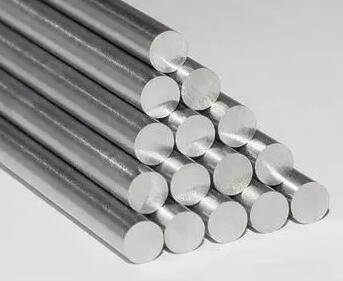
- High Melting Point: Stable up to 2,623°C, with minimal deformation under load.
- Excellent Thermal Conductivity: Efficient heat dissipation for thermal management.
- Low Thermal Expansion: Minimizes stress in cyclic heating applications.
- High-Temperature Strength: Retains strength at elevated temperatures, resisting creep and oxidation.
Research shows that high-temperature compression (e.g., at 1,200°C) further enhances density and hardness, with relative density approaching 99.4% and Vickers hardness increasing from 174.5±6.8 MPa to 224.1±21.0 MPa.
Microstructural Analysis
The microstructure of sintered molybdenum rods is engineered for performance:
- Grain Size and Morphology: Fine grains (<5 μm) improve strength and ductility. Hot deformation processes like rotary swaging refine grains and enhance tensile strength (>600 MPa).
- Texture Development: High-temperature processing induces fiber textures (e.g., <113>//ND), improving anisotropy and mechanical properties.
- Doping Effects: Additives like K, Al, and Si modify grain boundary behavior and porosity, enhancing high-temperature creep resistance and recrystallization temperature.
Advanced characterization techniques (SEM, XRD) reveal microstructural evolution during processing, guiding material optimization.
Applications in Industry
Sintered molybdenum rods are vital in:
- Steel Manufacturing: As an alloy additive, enhancing strength and corrosion resistance in high-performance steels.
- Electronics: For electrodes, heating elements, and refractory components in high-temperature furnaces.
- Aerospace: In engine nozzles, turbine blades, and heat shields, where thermal stability is critical.
- Nuclear Energy: For radiation shielding and structural components in reactors.
Their ability to withstand extreme temperatures and resist deformation ensures reliability in demanding applications.
Sintered molybdenum rods represent a pinnacle of materials engineering, combining exceptional high-temperature performance with a tailored microstructure. Their applications span industries requiring materials that operate reliably in extreme environments. As research continues to refine processing techniques and doping strategies, the potential of sintered molybdenum rods to enable next-generation technologies in aerospace, energy, and electronics is poised to expand.
For engineers and scientists seeking solutions to high-temperature challenges, sintered molybdenum rods offer a robust, versatile material platform—one that bridges the gap between theoretical potential and real-world performance.