
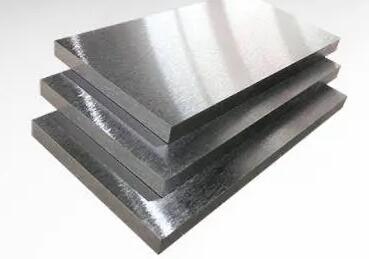
Molybdenum (Mo), known for its high melting point, excellent corrosion resistance, and good thermal and electrical conductivity, is a crucial material in various industrial applications, including aerospace, electronics, and chemical processing. Welding molybdenum plates requires precision and a deep understanding of the material’s unique properties to ensure robust and reliable joints. This practical guide outlines the essential methods, techniques, and applications for molybdenum plate welding.
1. Welding Methods for Molybdenum Plates
a. Gas Tungsten Arc Welding (GTAW)
GTAW, also known as TIG (Tungsten Inert Gas) welding, is a commonly used method for molybdenum welding due to its ability to produce high-quality welds with minimal contamination. The process involves an arc struck between a non-consumable tungsten electrode and the molybdenum plate, shielded by an inert gas (typically argon or helium) to prevent oxidation.
b. Electron Beam Welding (EBW)
Electron beam welding offers high energy density and precise control, making it suitable for welding thick molybdenum plates. The process involves accelerating electrons to high speeds in a vacuum chamber, focusing them on the joint to melt the material. EBW provides narrow, deep welds with minimal heat-affected zones.
c. Laser Beam Welding (LBW)
Laser beam welding is another high-energy density process suitable for molybdenum. It uses a focused laser beam to melt the material, resulting in narrow welds with rapid cooling rates, which can enhance mechanical properties.
2. Welding Techniques for Molybdenum Plates
a. Pre-Weld Preparation
- Cleaning: Thoroughly clean the surfaces to remove oils, greases, oxides, and other contaminants. Mechanical cleaning, chemical cleaning, or a combination of both may be necessary.
- Joint Design: Choose an appropriate joint design, such as a butt joint, lap joint, or T-joint, depending on the application requirements.
- Fixture and Clamping: Use fixtures and clamping devices to maintain proper alignment during welding.
b. Weld Parameter Optimization
- Current and Voltage: Adjust the welding current and voltage to match the thickness of the molybdenum plate and the chosen welding method.
- Travel Speed: Control the travel speed to ensure sufficient heat input for proper fusion without excessive heat-affected zones.
- Shielding Gas Flow Rate: Maintain an adequate shielding gas flow rate to protect the weld pool from contamination.
c. Post-Weld Treatment
- Annealing: Annealing can relieve residual stresses and improve the ductility of the welded joint. The annealing temperature and time should be carefully controlled to avoid embrittlement.
- Inspection: Conduct thorough inspections for defects such as cracks, porosity, and inclusions using non-destructive testing methods like ultrasonic testing or radiography.
3. Applications of Molybdenum Plate Welding
a. Aerospace Industry
Molybdenum’s high melting point and good creep resistance make it ideal for components in jet engines, rocket nozzles, and other high-temperature aerospace applications. Welding molybdenum plates allows for the fabrication of complex assemblies with precise dimensional control.
b. Electronics Industry
In the electronics industry, molybdenum is used in vacuum tubes, semiconductor manufacturing equipment, and high-temperature furnaces. Welded molybdenum assemblies are crucial for maintaining vacuum integrity and withstanding high temperatures.
c. Chemical Processing
Molybdenum’s corrosion resistance makes it suitable for use in chemical reactors, distillation columns, and other equipment exposed to aggressive chemicals. Welded joints in molybdenum plates ensure leak-tight seals and long-term durability.
Welding molybdenum plates requires a comprehensive understanding of the material’s properties and the appropriate welding methods and techniques. By following best practices for pre-weld preparation, optimizing weld parameters, and implementing post-weld treatments, high-quality welds can be achieved. The versatility of molybdenum makes it a valuable material in aerospace, electronics, chemical processing, and other industries, where welded assemblies play a critical role in ensuring performance and reliability.
By adhering to this practical guide, welders and engineers can harness the full potential of molybdenum plate welding, enabling innovative solutions and advancements across various industrial sectors.