
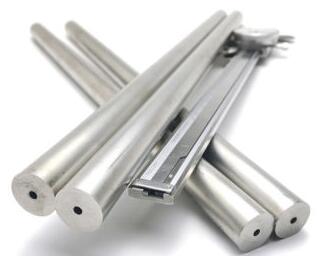
Molybdenum rods, as a high-performance metallic material, exhibit a unique combination of properties that make them indispensable in various industrial applications. This article delves into the material characteristics and diverse application fields of molybdenum rods, highlighting their significance in modern technology and industry.
Material Characteristics
Molybdenum sintered rods are renowned for their exceptional physical and chemical properties. Firstly, they possess a high melting point, which enables them to maintain structural integrity at extremely high temperatures. This characteristic is crucial in applications where high thermal stability is required.
Secondly, molybdenum sintered rods exhibit excellent thermal conductivity. They can efficiently transfer heat, making them ideal for use in components that require rapid and uniform heating. This property is particularly advantageous in industries such as glass manufacturing and semiconductor production, where precise temperature control is essential.
Moreover, molybdenum rods demonstrate low thermal expansion coefficients. This means they undergo minimal dimensional changes when exposed to thermal variations, ensuring consistent performance and reliability in high-temperature environments.
Additionally, molybdenum rods are highly resistant to oxidation and corrosion. They maintain their mechanical properties and appearance even in aggressive environments, extending their service life and reducing maintenance costs.
Applications
The unique properties of molybdenum rods make them suitable for a wide range of applications across various industries.
In the aerospace industry, molybdenum rods are used to manufacture components such as rocket engine nozzles, combustion chambers, and thermal shields. These parts must endure extreme temperatures and pressures, and molybdenum’s high melting point and thermal stability make it an ideal material for these applications.
The nuclear industry also relies heavily on molybdenum rods. They are used in the construction of heat exchangers, reactor vessels, and control rods within nuclear reactors. The high purity, strength, and corrosion resistance of molybdenum ensure the safe and efficient operation of nuclear facilities.
In the glass manufacturing industry, molybdenum rods are employed as electrodes in furnaces. Their excellent thermal conductivity and high melting point allow for stable temperature distribution in the glass melt, enhancing the quality and production yield of glass products.
The semiconductor industry benefits from molybdenum rods in the manufacture of diffusion furnaces and epitaxial furnaces. These furnaces require materials that can withstand high temperatures, high vacuums, and corrosive environments, making molybdenum an excellent choice.
Furthermore, molybdenum rods find applications in the medical industry, particularly in the manufacture of artificial joints. Their good biocompatibility and corrosion resistance contribute to the durability and performance of these medical devices.
In addition to these industries, molybdenum rods are also used in metallurgical processes, chemical reactors, and other high-temperature, high-pressure, and corrosive environments.
Molybdenum rods, with their high melting point, excellent thermal conductivity, low thermal expansion coefficient, and resistance to oxidation and corrosion, offer a versatile material solution for numerous industrial applications. From aerospace and nuclear technology to glass manufacturing and semiconductor production, molybdenum rods play a crucial role in ensuring the efficiency, reliability, and safety of modern industrial processes. As technology continues to advance, the demand for molybdenum rods is expected to grow, further expanding their application fields and contributing to the development of various industries.