
Molybdenum, a refractory metal with a body-centered cubic crystal structure, is widely used in industries such as aerospace, electronics, and vacuum devices due to its high temperature strength, hardness, stiffness, excellent corrosion resistance, good electrical and thermal conductivity, and low coefficient of thermal expansion. However, the production of molybdenum sheet, especially thin plates, faces significant challenges, particularly in the rolling process where lamination and peeling are common defects. This article explores the intersection of materials science and process optimization in addressing these challenges.
Materials Science Aspects
Molybdenum sheet are prone to lamination and peeling due to their brittle nature. These defects are often caused by impurities and uneven deformation during the rolling process. Impurities, both interstitial and metallic, can weaken the grain boundaries, making them susceptible to brittle transgranular fracture during tensile testing. Interstitial impurities, which are insoluble in molybdenum, form oxides or compounds at the grain boundaries, while metallic impurities, especially those with high melting points and hardness, remain undeformed and disrupt the deformation and flow of surrounding grains.
Moreover, the microstructure of molybdenum sheet can affect their mechanical properties. For instance, a banded structure, formed due to uneven deformation during rolling, can lead to anisotropy, where the strength and toughness differ along and across the bands. This anisotropy can further exacerbate lamination and peeling issues.
Process Optimization Strategies
To address the challenges of lamination and peeling in molybdenum plate rolling, several process optimization strategies have been proposed and tested.
Heating Temperature Control: The heating temperature during rolling plays a crucial role in the microstructure and properties of the molybdenum sheet. Increasing the initial rolling temperature from 1200°C to 1250°C has been found to improve the rolling quality and overall performance of the molybdenum sheet. Higher temperatures facilitate better deformation and reduce the likelihood of lamination and peeling.
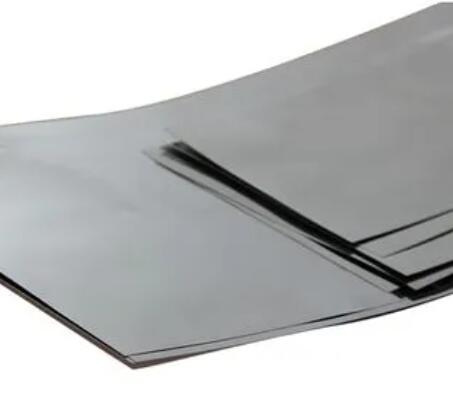
Deformation Rate Optimization: The deformation rate, particularly during the initial rolling passes, is another key parameter. A deformation rate of approximately 37.5% for the first pass has been shown to be effective in reducing lamination and peeling. This deformation rate ensures that deformation is more uniform throughout the thickness of the plate, reducing the tensile stresses that can lead to lamination.
Cross-Rolling Technique: To further reduce anisotropy and improve the uniformity of the microstructure, cross-rolling can be employed. This technique involves changing the rolling direction at least once during the rolling process. Cross-rolling disrupts the formation of banded structures and promotes a more uniform microstructure throughout the plate.
Impurity Control:Strictly controlling the impurity content is the key to preventing delamination and peeling. By improving the processing and smelting technology of raw materials, the content of impurity elements can be reduced, thereby reducing their concentration and harm at grain boundaries.
Experimental Results and Analysis
Experimental studies have confirmed the effectiveness of these optimization strategies. For instance, research has shown that molybdenum sheet rolled using the optimized process exhibit a fiber-like microstructure with finely interlocking grains, which are more compact and have fewer pores compared to plates rolled using traditional processes. This microstructure contributes to improved mechanical properties such as tensile strength, yield strength, and elongation.
Furthermore, studies on the effects of different head shapes, widths, and processing rates during warm and cold rolling have provided insights into the mechanisms of lamination and peeling. It has been found that shearing off the hot-rolled head before further processing can significantly reduce lamination and peeling, especially at higher processing rates.
The production of high-quality molybdenum sheet requires a delicate balance between materials science and process optimization. By controlling heating temperatures, optimizing deformation rates, employing cross-rolling techniques, and strictly controlling impurity levels, manufacturers can significantly reduce lamination and peeling defects, thereby improving the overall quality and performance of molybdenum plates. As the demand for molybdenum sheet continues to grow in industries such as aerospace and electronics, ongoing research and innovation in this area will be crucial in meeting these demands and driving advancements in materials science and processing technology.