
copper-tungsten alloy, as the new darling in the field of high-temperature resistant materials, has demonstrated its remarkable performance across multiple industries. Below is a detailed account of copper-tungsten alloy’s fire challenge record and its unique characteristics.
I. Basic Characteristics of copper-tungsten Alloy
copper-tungsten alloy, composed of tungsten and copper, typically contains 10% to 50% copper. This alloy is meticulously crafted through advanced infiltration sintering technology using fine tungsten and copper powders. It combines the strengths of both metals, offering a high melting point, exceptional hardness, resistance to burnout, and good anti-adhesion properties. Specifically, tungsten boasts a melting point of 3410°C, while copper, though having a lower melting point of 1083°C, excels in electrical and thermal conductivity. As a result, copper-tungsten alloy maintains moderate electrical and thermal conductivity while excelling in high-temperature resistance.
II. Fire Challenge Record
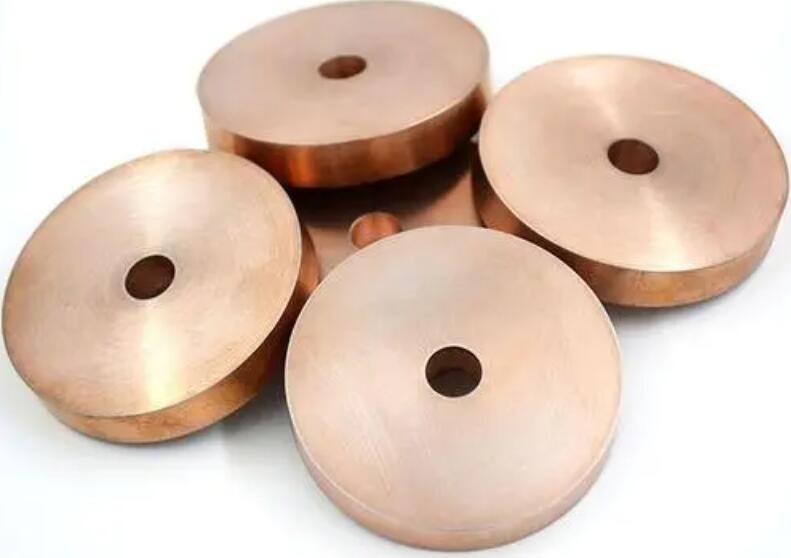
During the fire challenge, copper-tungsten alloy showcased its remarkable high-temperature resistance. When exposed to intense flames, the alloy’s surface temperature soared rapidly. However, due to tungsten’s high melting point and copper’s “sweating” cooling effect (whereby copper evaporates at high temperatures, carrying away heat), the alloy’s surface temperature did not continue to climb towards its melting point. Instead, the alloy’s internal structure remained stable, with no signs of melting or deformation.
III. Application Fields
copper-tungsten alloy’s high-temperature resistance has led to its widespread adoption in various industries:
Aerospace: In aerospace, tungsten-copper alloy is used in components such as missile and rocket engine nozzles, gas vanes, air vanes, and nose cones. These parts must withstand extreme temperatures and airflow, making copper-tungsten alloy an ideal choice due to its high-temperature resistance and ablation resistance.
Power Electronics: copper-tungsten alloy finds applications in power electronics, including contacts and protective rings for high-voltage and ultra-hydraulic switches and circuit breakers. Its high electrical and thermal conductivity, coupled with arc erosion resistance, ensures the stable operation of power equipment.
Machining: In machining, copper-tungsten alloy serves as electrodes for resistance welding and electric discharge machining. Its high hardness, wear resistance, and excellent processability make it efficient and precise for various machining tasks.
Other Fields: Additionally, copper-tungsten alloy is widely used in microelectronics, metallurgy, sports equipment, and other sectors. Its unique combination of properties makes it an ideal material for complex working conditions.
As technology advances, the demand for high-temperature resistant materials continues to grow. copper-tungsten alloy, as the new favorite in this field, boasts a promising future. With continuous improvements in manufacturing processes and performance optimization, copper-tungsten alloy is poised to play a more significant role in various industries. Researchers will also continue to explore new properties and applications of copper-tungsten alloy to meet the diverse needs of different sectors.
In conclusion, copper-tungsten alloy has demonstrated its exceptional high-temperature resistance during the fire challenge and has found widespread applications across multiple industries. With technological advancements and increasing demand, the future of copper-tungsten alloy is indeed bright and Worth the wait。