
Abstract: This paper delves into the issue of welding deformation in molybdenum plates, a critical challenge in high-precision manufacturing industries. Through a comprehensive analysis of relevant literature and research findings, this study explores the causes of welding deformation in molybdenum plates, and proposes effective control technologies. These technologies encompass structural design optimization, welding process parameter adjustments, and the application of advanced welding methods. The research aims to provide valuable insights and practical solutions for improving the welding quality of molybdenum plates, thereby promoting the advancement of related industries.
Keywords: Molybdenum plate; Welding deformation; Control technology
1. Introduction
Molybdenum plates are widely used in various high-tech fields such as aerospace, electronics, and nuclear energy due to their excellent high-temperature strength, good thermal conductivity, and low thermal expansion coefficient. However, during the welding process of molybdenum plates, welding deformation is prone to occur, which can significantly affect the dimensional accuracy, mechanical properties, and service performance of the welded structures. Therefore, the research on welding deformation control technology for molybdenum plates is of great practical significance for ensuring the quality and reliability of welded products.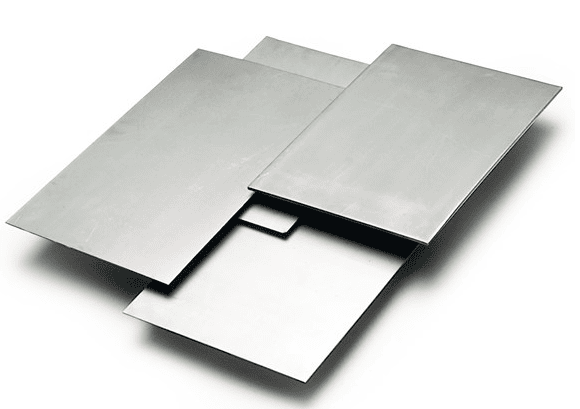
2. Causes of Welding Deformation in Molybdenum Plates
2.1 Thermal Effect
Welding is a process that involves local heating and rapid cooling. During welding, the heat input causes the temperature of the weld and its surrounding areas to rise sharply, resulting in thermal expansion. As the temperature decreases after welding, the welded areas contract, but due to the constraints from the surrounding cold metal, residual stresses and deformations are generated. For molybdenum plates, due to their small thickness, the heat is easily conducted and dissipated, leading to a more significant temperature gradient and thermal stress, which further exacerbates the welding deformation.
2.2 Material Properties
Molybdenum has unique physical and mechanical properties, such as high melting point, high strength, and good plasticity. However, these properties also make it more sensitive to welding thermal cycles. The high melting point of molybdenum requires a relatively high welding heat input, which increases the risk of thermal deformation. Additionally, the good plasticity of molybdenum allows it to undergo significant plastic deformation under the action of thermal stress, resulting in more pronounced welding deformation.
2.3 Welding Process Parameters
Welding process parameters, including welding current, welding voltage, welding speed, and welding sequence, have a significant impact on welding deformation. Improper selection of these parameters can lead to uneven heating and cooling of the welded joint, uneven distribution of residual stresses, and increased welding deformation. For example, a high welding current and a low welding speed will increase the heat input, resulting in a larger thermal effect and more severe welding deformation.
2.4 Structural Design
The structural design of the welded joint also affects welding deformation. Unreasonable structural design, such as asymmetric welded joints, large welded joints, and improper arrangement of stiffeners, can cause uneven stress distribution during welding, leading to increased welding deformation.
3. Welding Deformation Control Technologies for Molybdenum Plates
3.1 Structural Design Optimization
- Reasonable Weld Size and Position: Selecting a reasonable weld size can effectively reduce welding deformation. A large weld size will increase the welding heat input and the amount of welded metal, leading to more severe welding deformation. Therefore, under the premise of ensuring the structural strength and welding quality, the weld size should be minimized as much as possible. Additionally, arranging the welds symmetrically with respect to the neutral axis of the section or close to the neutral axis can make the deformations generated during welding offset each other, thereby reducing the overall welding deformation.
- Minimizing Unnecessary Welds: In the structural design, unnecessary welds should be reduced as much as possible. Excessive welds will not only increase the welding workload but also increase the risk of welding deformation. For example, in the design of rib plates for structural stability and stiffness, the number of rib plates should be reasonably controlled to avoid excessive welding deformation.
3.2 Welding Process Parameter Adjustment
- Optimal Welding Heat Input: By adjusting the welding current, welding voltage, and welding speed, the welding heat input can be optimized to reduce welding deformation. Generally, a lower welding heat input is beneficial for reducing welding deformation. However, the welding heat input should also meet the requirements of welding quality, such as ensuring complete penetration and good fusion of the welded joint.
- Welding Sequence Optimization: Rationalizing the welding sequence can effectively control welding deformation. For welded structures with multiple welds, the welding sequence should be arranged symmetrically or in a balanced manner to make the deformations generated during welding offset each other. For example, in the welding of long welded joints, the back-step welding method can be adopted to reduce the longitudinal shrinkage deformation.
3.3 Application of Advanced Welding Methods
- Laser Welding: Laser welding has the advantages of high energy density, small heat-affected zone, and fast welding speed, which can effectively reduce welding deformation. In laser welding of molybdenum thin plates, by adjusting the laser power, welding speed, and focal length, the welding quality and deformation can be well controlled. For example, Wang Juan et al. have conducted research on the laser welding of molybdenum alloys and achieved good welding results with low deformation.
- Electron Beam Welding: Electron beam welding is another advanced welding method suitable for molybdenum thin plates. It has the characteristics of high energy density, deep penetration, and narrow welds, which can reduce the heat input and welding deformation. In electron beam welding, the welding parameters can be precisely controlled to achieve high-quality welded joints with minimal deformation.
3.4 Post-Welding Deformation Correction
- Mechanical Correction: Mechanical correction methods, such as rolling, pressing, and stretching, can be used to correct welding deformations. These methods apply external forces to the welded structures to make them undergo plastic deformation, thereby eliminating or reducing the residual deformations. However, mechanical correction methods may cause additional stresses in the welded structures and should be used with caution.
- Thermal Correction: Thermal correction methods, such as local heating and flame correction, can also be used to correct welding deformations. By heating the deformed areas of the welded structures to a certain temperature and then cooling them, the residual stresses can be redistributed, and the deformations can be corrected. Thermal correction methods are relatively simple and easy to operate, but they may cause changes in the microstructure and mechanical properties of the welded structures.
4. Case Studies
4.1 Case 1: Welding of Molybdenum Thin Plates for Aerospace Components
In the welding of molybdenum thin plates for aerospace components, the welding deformation control technology was applied. Through structural design optimization, the weld size was minimized, and the welds were arranged symmetrically. The welding process parameters were adjusted to reduce the welding heat input, and the laser welding method was adopted. After welding, the mechanical correction method was used to further correct the residual deformations. The results showed that the welding deformation was effectively controlled, and the dimensional accuracy and mechanical properties of the welded components met the design requirements.
4.2 Case 2: Welding of Molybdenum Thin Plates for Nuclear Energy Equipment
In the welding of molybdenum thin plates for nuclear energy equipment, a combination of welding process parameter adjustment and advanced welding methods was used. The welding sequence was optimized to reduce the uneven distribution of residual stresses, and the electron beam welding method was employed to minimize the welding heat input and deformation. The post-welding thermal correction method was also applied to correct the residual deformations. The results indicated that the welding quality was improved, and the welding deformation was significantly reduced, ensuring the safe and reliable operation of the nuclear energy equipment.
5. Conclusion
Welding deformation is a common problem in the welding of molybdenum thin plates, which can seriously affect the quality and performance of welded products. This paper has analyzed the causes of welding deformation in molybdenum thin plates and proposed a series of effective control technologies, including structural design optimization, welding process parameter adjustment, the application of advanced welding methods, and post-welding deformation correction. Through case studies, it has been demonstrated that these control technologies can effectively reduce welding deformation and improve the welding quality of molybdenum thin plates. In future research, further exploration and optimization of welding deformation control technologies for molybdenum thin plates are still needed to meet the increasingly high requirements of high-precision manufacturing industries.
References
[The specific references related to the research content, such as the papers of Wang Juan, Feng Guangjie, Zhang Linjie, etc. mentioned in the reference materials, should be listed here in APA format. Due to space limitations, the detailed references are not listed one by one in this article