
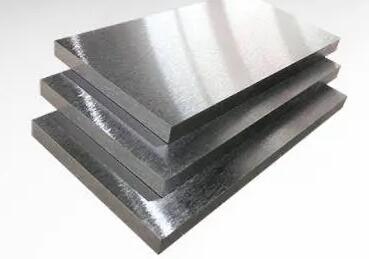
Molybdenum (Mo) plates, known for their high melting point, excellent thermal conductivity, and good corrosion and wear resistance, are widely used in various industries such as aerospace, electronics, energy, chemicals, metallurgy, and nuclear industries. However, due to their inherent brittleness and complex manufacturing processes, molybdenum plates are prone to cracks, which can significantly affect their performance and reliability. This article reviews the current research progress in crack detection and repair techniques for molybdenum plates.
Crack Detection Techniques
1. Non-Destructive Testing (NDT) Methods
Non-destructive testing methods are widely used for crack detection in molybdenum plates due to their ability to evaluate material integrity without causing damage. Common NDT methods include:
- Ultrasonic Testing (UT): Utilizes ultrasonic waves to detect discontinuities in materials. This method is highly sensitive to cracks and can provide accurate information on crack location, size, and orientation.
- Radiographic Testing (RT): Uses X-rays or gamma rays to create images of the internal structure of materials. Cracks appear as dark lines on the radiographic film, allowing for easy identification.
- Magnetic Particle Inspection (MPI): Applies a magnetic field to the material and then sprinkles fine magnetic particles onto the surface. Cracks will attract and hold the particles, revealing their presence.
- Liquid Penetrant Testing (PT): Uses a penetrant that is capillary active to seep into surface-breaking defects. After removing excess penetrant, a developer is applied to draw out the penetrant from the defects, forming a visible indication.
2. High-Resolution Imaging Techniques
With the development of advanced imaging technology, high-resolution microscopes such as scanning electron microscopes (SEM) and transmission electron microscopes (TEM) have become important tools for crack detection. These techniques can provide detailed images of crack morphology and the surrounding microstructure, aiding in a more comprehensive understanding of crack formation and propagation mechanisms.
Repair Techniques
1. Welding Techniques
Welding is a common method for repairing cracks in molybdenum plates. However, due to molybdenum’s high melting point and brittleness, special welding techniques and materials are required. Common welding methods include:
- TIG Welding: Tungsten inert gas welding uses a non-consumable tungsten electrode to produce an arc between the electrode and the workpiece. Argon or helium is used as a shielding gas to protect the weld pool from contamination.
- Electron Beam Welding (EBW): Utilizes a high-velocity stream of electrons to melt the material at the joint. This method provides a narrow, deep weld with minimal heat-affected zone (HAZ), reducing the risk of crack formation.
- Brazing: A joining process that uses a filler metal with a lower melting point than the base metal to form a joint. Brazing can be used to repair cracks in molybdenum plates, especially when the joint requires good sealing properties.
2. Mechanical Repair Techniques
For cracks that are not suitable for welding, mechanical repair techniques such as drilling stop holes or grinding can be used. Drilling stop holes can prevent crack propagation by interrupting the crack path, while grinding can remove the cracked material and smooth the surface.
3. Thermal Treatment
Thermal treatment, such as annealing, can be used to improve the plasticity of molybdenum plates and reduce the risk of crack formation. Annealing involves heating the material to a specific temperature, holding it for a period, and then cooling it slowly. This process can relieve stresses, soften the material, and improve its ductility.
Research Progress and Future Directions
Recent research has focused on developing more efficient and accurate crack detection techniques and improving welding methods for molybdenum plates. Advanced imaging techniques, such as SEM and TEM, have been increasingly used to study crack morphology and propagation mechanisms. Additionally, researchers are exploring new welding materials and processes to reduce the risk of crack formation and improve joint strength.
Future research should continue to focus on developing more sensitive and reliable crack detection techniques, as well as improving welding methods to minimize the HAZ and reduce the risk of crack formation. Additionally, there is a need for further research on the effects of thermal treatment on the mechanical properties of molybdenum plates and the development of new repair techniques that can be used in harsh environments.
In conclusion, crack detection and repair techniques for molybdenum plates are crucial for ensuring the reliability and safety of these materials in various applications. With ongoing research and technological advancements, it is expected that more effective and efficient methods will be developed to address these challenges.