
Molybdenum is a silvery-white rare metal with the following key physical properties and reasons for its indispensability in modern industry:
Physical Properties of Molybdenum
- Appearance and Morphology: Molybdenum is a hard, silvery-white metal with a cubic crystal system.
- Density: The relative density of molybdenum is 10.28g/cm³ (or 10.22g/cm³ according to some sources), making it relatively dense.
- Melting Point and Boiling Point: With a melting point of 2622°C (or 2620°C according to some sources) and a boiling point of 4825°C, molybdenum exhibits excellent high-temperature resistance.
- Electrical Resistivity: The electrical resistivity of molybdenum is 5.2X10⁻⁸Ω·m at 20°C, and it decreases as the temperature rises, indicating good electrical conductivity.
- Thermal Conductivity: Molybdenum has a high thermal conductivity, several times that of many high-temperature metals, approximately half of copper, which aids in heat dissipation.
- Coefficient of Linear Expansion: The coefficient of linear expansion of molybdenum is small, only about one-third to one-half of that of ordinary steel, making molybdenum materials dimensionally stable at high temperatures and reducing the risk of cracking.
- Elastic Modulus: Molybdenum has a very high elastic modulus, one of the highest among metals in industry, and it is less affected by temperature.
- Thermal Neutron Capture Cross-Section: Molybdenum has a small thermal neutron capture cross-section, which is important for its use as structural material in nuclear reactors.
Reasons for Molybdenum’s Indispensability in Modern Industry
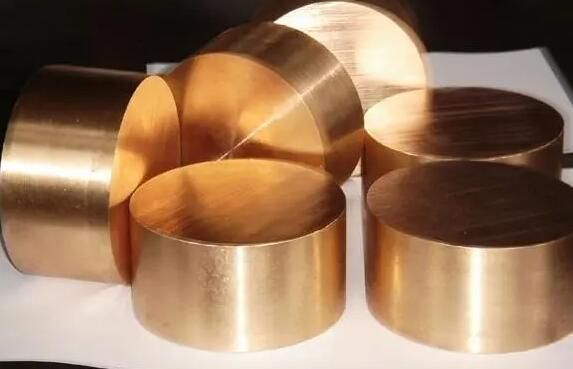
- Important Alloying Element in Steel Industry: Molybdenum significantly enhances the strength, hardness, and toughness of steel, improving its wear resistance and corrosion resistance. Adding molybdenum to high-strength low-alloy steel allows steel to maintain good performance under high pressure and high-temperature environments, crucial for manufacturing automotive parts, building structures, and machinery equipment.
- Catalyst in Chemical Industry: Molybdenum-containing catalysts are widely used in petroleum refining processes, improving the quality and yield of petroleum products. Additionally, molybdenum compounds are used in the production of lubricants, pigments, and corrosion inhibitors.
- Critical Material in Electronics Industry: Due to its good electrical conductivity and high-temperature resistance, molybdenum is often used in the manufacture of electronic components, such as electrodes for vacuum tubes and transistors, as well as integrated circuits.
- High-Temperature Components in Aerospace Industry: The high strength and high-temperature resistance of molybdenum make it an ideal material for manufacturing high-temperature components, such as turbine blades for jet engines.
- Applications in Energy and Nuclear Energy Fields: In solar cell panel manufacturing, molybdenum thin films can be used as electrode materials to improve the conversion efficiency of the panels. In nuclear energy, molybdenum alloys are commonly used in the manufacture of nuclear reactor components due to their ability to withstand high-temperature and radiation environments.
In summary, molybdenum, with its unique physical properties and wide range of applications, has become an indispensable element in modern industry. With the continuous development of technology, the application fields of molybdenum will continue to expand and deepen, creating more value for humanity.