
The escalating demands for high-performance electronic devices have necessitated advanced thermal management solutions to ensure reliability and longevity. Molybdenum-copper (Mo-Cu) composites, with their unique combination of thermal conductivity, adjustable coefficient of thermal expansion (CTE), and mechanical robustness, have emerged as promising candidates for thermal management applications in electronic packaging. This paper reviews the thermal properties of Mo-Cu carriers, their advantages in mitigating thermal stresses, and recent research advancements in optimizing their performance for next-generation electronics.
1. Introduction
The miniaturization and integration of electronic components have led to significant increases in power densities, exacerbating thermal challenges. Efficient heat dissipation is critical to prevent device failure, ensure signal integrity, and enhance overall performance. Traditional materials such as copper and aluminum struggle to meet these demands due to mismatches in CTE with semiconductor materials (e.g., silicon, gallium nitride) or inadequate thermal conductivity. Mo-Cu composites address these limitations by integrating copper’s high thermal conductivity (≥401 W/m·K) with molybdenum’s low CTE (≈5.35×10⁻⁶/K) and high stiffness, offering a tailored solution for thermal management.
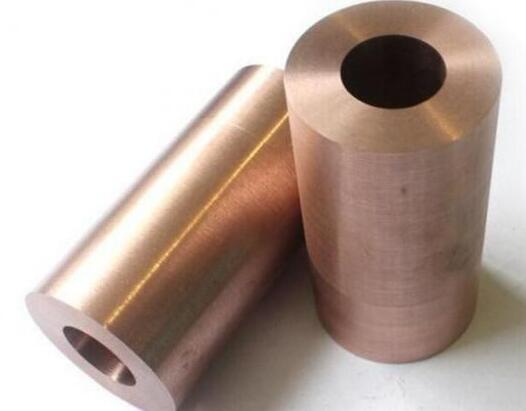
2. Material Properties of Mo-Cu Composites
Mo-Cu composites are typically fabricated via powder metallurgy, infiltration, or rolling-bonding processes, allowing tunable microstructures and properties. Key characteristics include:
- Thermal Conductivity: Mo-Cu alloys exhibit thermal conductivity ranging from 9.54 to 210 W/m·K, depending on the copper content (e.g., Mo50Cu50 vs. Mo85Cu15).
- CTE Matching: By adjusting the Mo:Cu ratio, the CTE can be tailored to match semiconductor substrates (e.g., Mo85Cu15 CTE ≈7.0×10⁻⁶/K vs. Si CTE ≈4.1×10⁻⁶/K), reducing thermal stress during thermal cycling.
- Mechanical Strength: Mo reinforces the composite, providing high yield strength (≥760 MPa) and rigidity, critical for structural support in harsh environments.
3. Thermal Management Applications in Electronic Packaging
Mo-Cu carriers are deployed in:
- High-Power Devices: Serving as heat sinks for power amplifiers, LEDs, and laser diodes, where rapid heat dissipation prevents junction overheating.
- RF/Microwave Components: Ensuring thermal stability and signal integrity in communication systems.
- Semiconductor Substrates: As chip carriers or interposers, facilitating efficient heat transfer from active devices to cooling systems.
4. Research Methodologies and Experimental Insights
Recent studies have focused on optimizing Mo-Cu composites for thermal performance:
- Layered Structures: Cu-Mo-Cu sandwiches with controlled layer thicknesses demonstrate enhanced thermal conductivity and reduced interfacial thermal resistance. For instance, a 63 wt% Cu composite maintained stable interfaces after 2000 thermal cycles (-40°C to +125°C) without degradation.
- Finite Element Analysis (FEA): Simulations predict thermal stress distributions and CTE mismatches, guiding material design. For example, FEA-optimized Mo-Cu composites reduced peak stresses by 40% compared to pure Cu in thermal cycling tests.
- Processing Techniques: Advanced rolling and annealing processes improve material density and homogeneity, enhancing thermal conductivity by up to 20% while maintaining dimensional stability.
5. Comparative Advantages Over Traditional Materials
| Material | Thermal Conductivity (W/m·K) | CTE (10⁻⁶/K) | Density (g/cm³) | Cost |
|---|---|---|---|---|
| Mo-Cu (50/50) | 9.54–210 | 7.0–23.0 | 8.5–11.5 | Moderate |
| Copper | 401 | 16.5 | 8.96 | Low |
| Aluminum | 237 | 23.2 | 2.70 | Low |
| Tungsten-Copper | 160–280 | 6.5–9.0 | 16.0–18.5 | High |
Mo-Cu composites outperform aluminum and tungsten-copper in CTE matching while offering a cost-effective alternative to pure copper or tungsten-copper for many applications.
6. Challenges and Future Directions
Despite their promise, Mo-Cu composites face challenges such as:
- Fabrication Complexity: Achieving high density and uniform microstructure requires precise processing.
- Cost: Higher than aluminum but lower than tungsten-copper.
Future research will focus on: - Nanostructured Composites: Enhancing thermal conductivity via nanoscale grain boundaries.
- Additive Manufacturing: Enabling complex geometries for conformal cooling in 3D packages.
- Hybrid Materials: Combining Mo-Cu with diamond or graphene for extreme thermal performance.
Mo-Cu carriers represent a paradigm shift in thermal management for electronic packaging, offering a balanced solution to the interplay between thermal conductivity, CTE matching, and mechanical stability. As device power densities continue to rise, Mo-Cu composites are poised to become indispensable in next-generation electronics, including 5G telecom, electric vehicles, and AI hardware. Further innovations in material design and processing will unlock their full potential, driving the evolution of thermal management technologies.