
The selection of tungsten rods is diverse, catering to the high-precision needs of various industries. The following is a detailed introduction to the selected types of tungsten rods, aiming to meet the specific requirements across different sectors.
I. Classification by Composition
- Pure Tungsten Rods
- Characteristics: Containing over 99.95% tungsten, featuring high density, strength, and a high melting point (approximately 3410°C).
- Applications: Suitable for manufacturing high-temperature components, vacuum furnace parts, electrodes, grids, and other applications requiring extreme purity.
- Tungsten Alloy Rods
- Subdivisions: Including tungsten-iron alloy rods, tungsten-cobalt alloy rods, tungsten-iridium alloy rods, etc.
- Characteristics: Enhanced properties such as hardness, corrosion resistance, and wear resistance through the addition of different alloy elements (e.g., cobalt, nickel, iron, copper, iridium).
- Applications: Tungsten-cobalt alloy rods are used in cutting tools, drills, and milling cutters; tungsten-iridium alloy rods, due to their excellent high-temperature and corrosion resistance, are utilized in spacecraft combustion chambers and high-temperature thermocouples.
II. Classification by Processing Techniques
- Drawn Tungsten Rods
- Characteristics: Manufactured through drawing processes, resulting in high surface smoothness and dimensional accuracy.
- Applications: Ideal for high-temperature components, vacuum furnace parts, and other applications requiring high surface finish and dimensional precision.
- Sintered Tungsten Rods
- Characteristics: Produced through sintering, with a dense and uniform internal structure but a relatively rough surface.
- Applications: Suitable for cutting tools, precision molds, and other applications requiring high hardness and wear resistance.
- Forged Tungsten Rods
- Characteristics: Further processed through forging after sintering, with improved physical properties and dimensional accuracy through subsequent machining.
- Applications: Used in demanding applications such as key materials in ion implantation processes and electrodes in the rare earth industry.
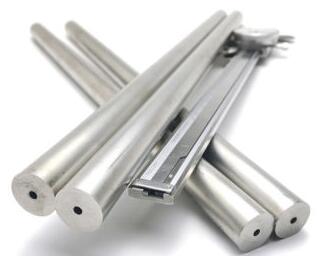
III. Classification by Purpose
- Cutting Tungsten Rods
- Applications: Specifically designed for manufacturing cutting tools and blades.
- Electrode Tungsten Rods
- Applications: Utilized in the production of electrodes, vacuum furnace parts, and other electronic and high-temperature equipment components.
- Tungsten Wire Rods
- Characteristics: Composed of multiple tungsten or other metal wires twisted together, with extremely fine diameters (typically 0.001-0.005 inches).
- Applications: Exhibiting excellent high-temperature electrical conductivity, widely used in high-temperature electronic packaging and electrothermal device manufacturing.
- Powder Metallurgy Tungsten Rods
- Applications: Suitable for manufacturing high-strength components and aerospace engine parts with stringent material performance requirements.
IV. Additional Parameters and Selection Suggestions
Tungsten rods also vary in diameter, length, and surface treatment. For instance, diameters range from 0.5 mm to 20 mm, while lengths typically span from 100 mm to 1000 mm. Surface treatments include black (sandblasted) and polished states. When selecting tungsten rods, it is crucial to consider the specific application scenario and requirements, comprehensively evaluating factors such as composition, processing techniques, dimensional accuracy, surface condition, and price to achieve optimal performance and quality.