
In the realm of advanced materials, molybdenum plates stand out due to their exceptional properties that cater to the rigorous demands of high-end manufacturing. Known for their remarkable toughness, corrosion resistance, and high-temperature stability, molybdenum plates have earned a reputation as a go-to material for various industries ranging from aerospace to electronics. This article delves into the reasons behind molybdenum’s rise to prominence in the world of high-performance materials.
Exceptional Toughness and Strength
Molybdenum plates are renowned for their exceptional toughness, which is a combination of their high tensile strength and ductility. This makes them ideal for applications where materials need to withstand extreme pressures, stresses, and impacts without failing. In the aerospace industry, for instance, molybdenum plates are used in the manufacturing of aircraft engines and structural components due to their ability to maintain structural integrity even under the most demanding flight conditions.
High-Temperature Stability
Another significant advantage of molybdenum plates is their high-temperature stability. Molybdenum retains its mechanical properties even at temperatures as high as 2600°F (1427°C). This makes it an excellent choice for applications involving high-temperature environments, such as furnace linings, heating elements, and components in molten metal processing.
Corrosion Resistance
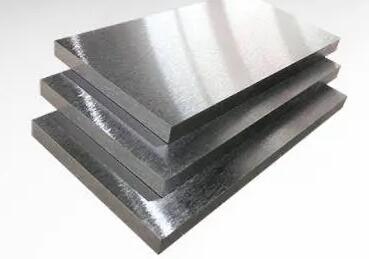
Molybdenum’s corrosion resistance is another key factor that sets it apart from other materials. It is highly resistant to attack by acids, alkalis, and oxidizing agents, making it suitable for use in chemical processing equipment and in marine environments where exposure to corrosive elements is inevitable.
Versatility in Alloying
Molybdenum’s versatility in forming alloys with other metals further enhances its appeal in high-end manufacturing. Alloying molybdenum with nickel, cobalt, and chromium, for example, produces superalloys that exhibit even higher strength, corrosion resistance, and temperature stability. These superalloys are critical in the production of turbine blades, rocket engines, and other components that operate under extreme conditions.
Sustainability and Environmental Considerations
In addition to its technical advantages, molybdenum plates also offer sustainability benefits. They have a long lifespan and can be recycled with minimal loss of properties, reducing the environmental footprint associated with material waste and disposal.
In summary, molybdenum plates have emerged as a preferred material for high-end manufacturing due to their exceptional toughness, high-temperature stability, corrosion resistance, and versatility in alloying. As industries continue to push the boundaries of performance and efficiency, molybdenum plates are poised to play an increasingly critical role in meeting these challenges. With their unique combination of properties, molybdenum plates are not just a material of choice; they are a material of the future.